
Last updated November 15, 2026
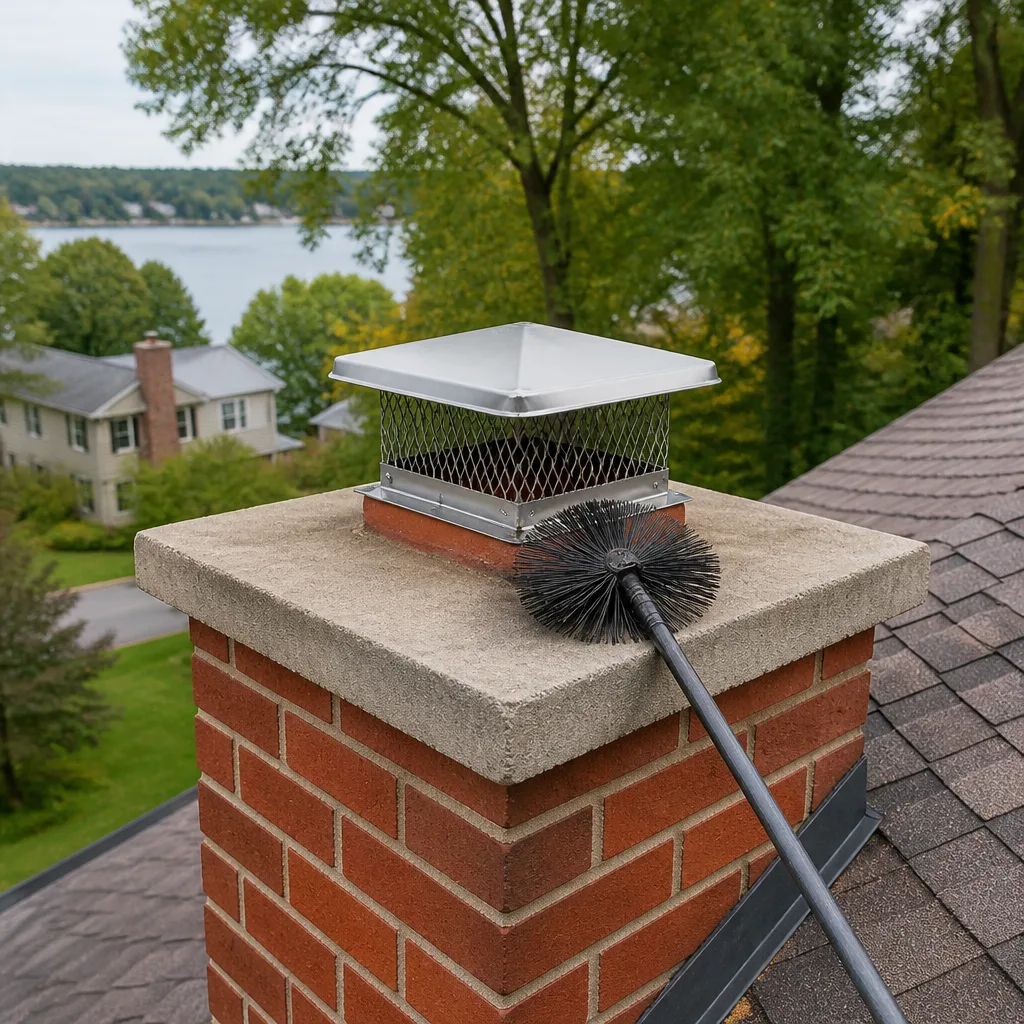 Sweep & inspection
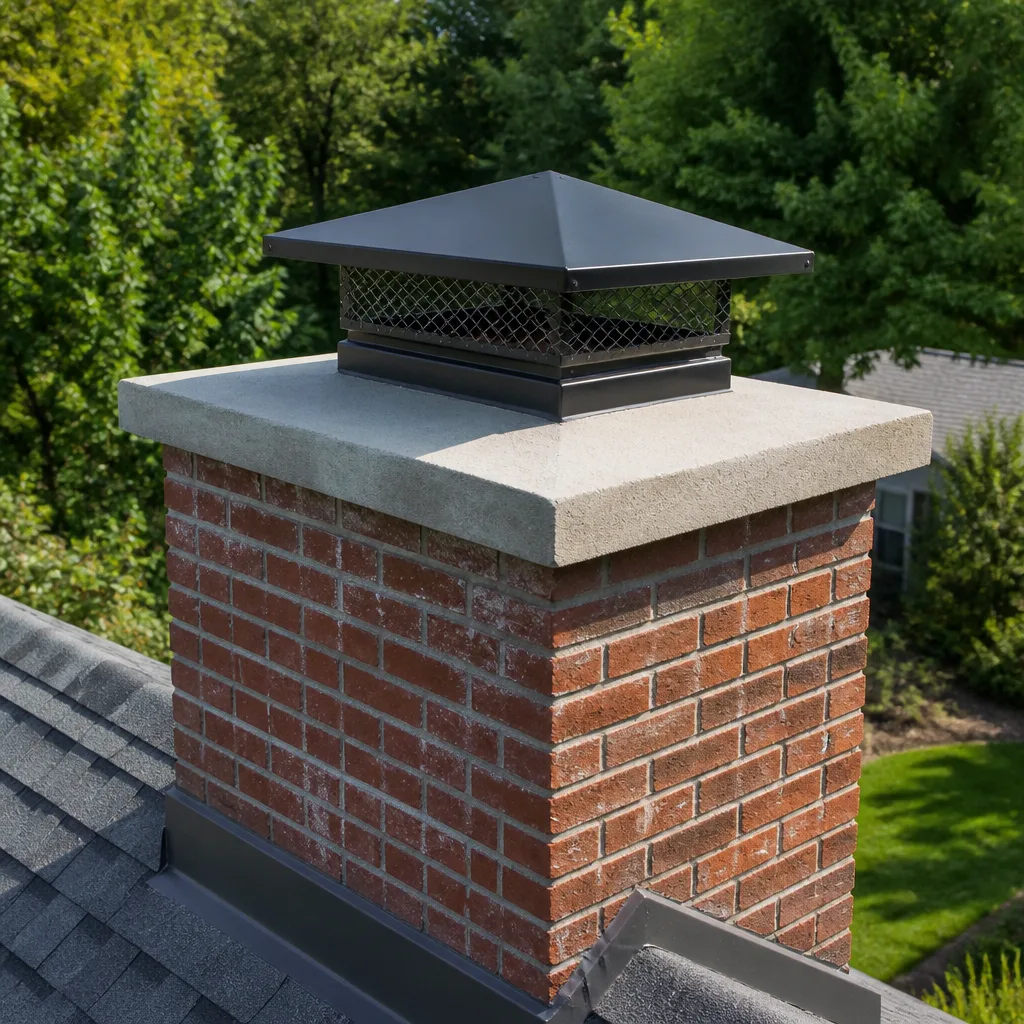 Caps & crowns
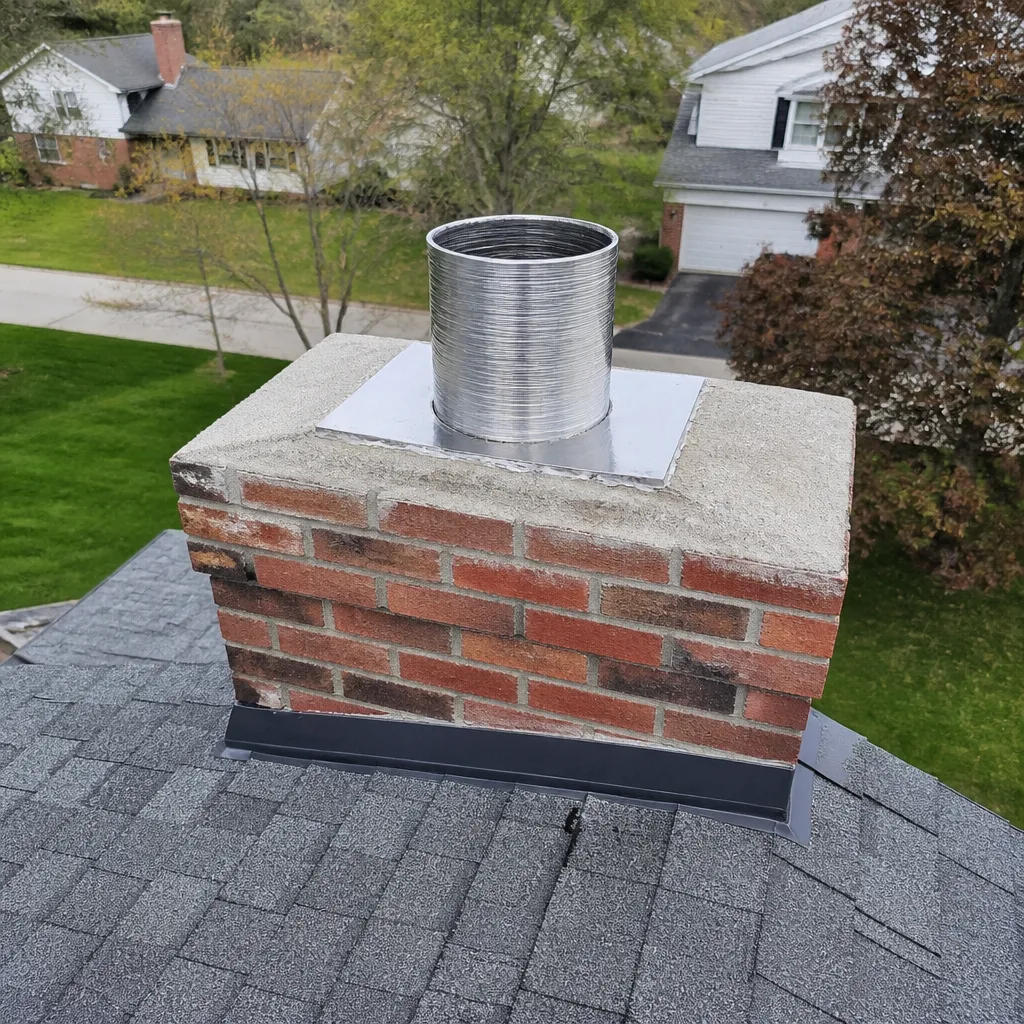 Flue relining
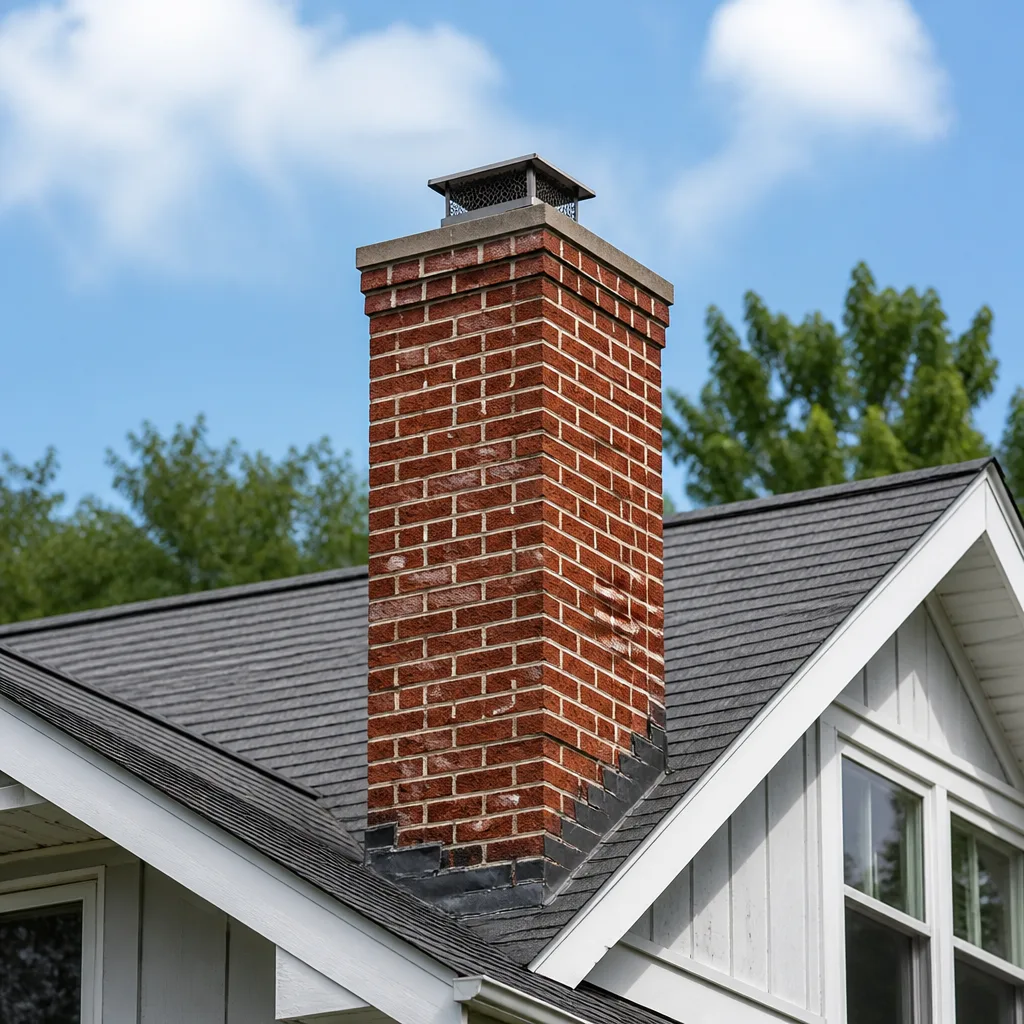 Masonry repair
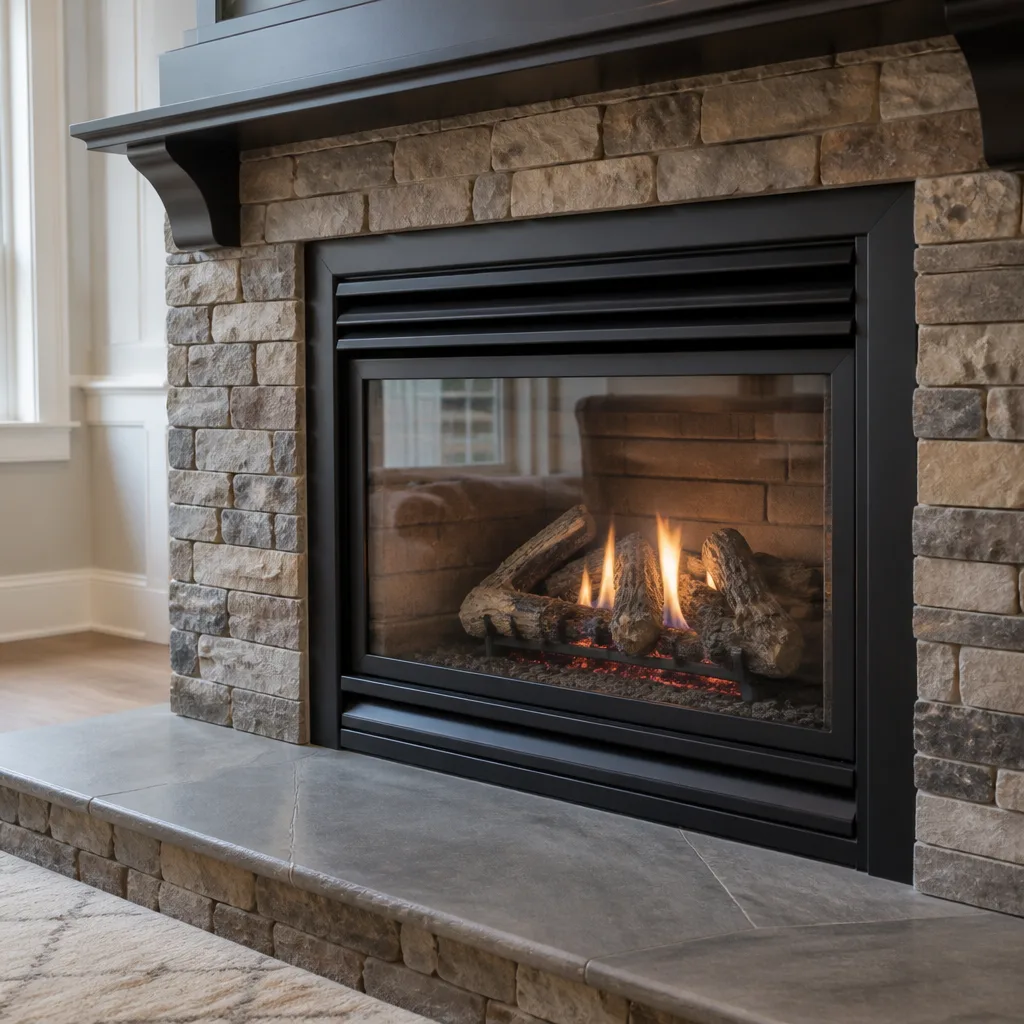 Gas fireplace service
Level 1 sweep and inspection to the NFPA 211 annual standard - flue, crown, cap, and flashing checked and photographed
Chimney sweep logs do not sweep chimneys. They loosen some creosote - which then falls where a brush and vacuum still have to collect it.
Chimney Cleaning Warning Signs: A Cleveland Homeowner’s Reference Guide
A strong chimney odor in July, when no fire has been burned in months, is not a cleaning problem. It’s a negative-pressure problem, and sweeping the flue won’t touch it. Cleveland homeowners run into this repeatedly: the house smells like a fireplace in the middle of summer, or there’s a white stain creeping down the brick, or the firebox has gone black above the damper, and the instinct is either to panic or to shrug it off until fall. Both reactions are wrong. What follows is a decoding guide. Nine common warning signs, matched to the underlying condition, so you can describe what you’re seeing accurately and act with the right level of urgency.
Quick Answer
Chimney warning signs fall into two groups: those that let you keep using the fireplace while you schedule a chimney sweep, and those that mean shutting the appliance down today. White staining, light creosote buildup, and an occasional smoky smell after a cold start are usually the first kind. An oil or asphalt smell, rust on the damper, crumbling mortar inside the firebox, or a blocked flue are the second. Decoding the sign correctly is what tells you which one you’re looking at.
Styles & brands we work with
- Sweep & inspection
- Caps & crowns
- Flue relining
- Masonry repair
- Gas fireplace service
Table of Contents
- Why Your Chimney Smells in Summer (and Why Sweeping Won’t Fix It)
- White Staining on the Brick: Efflorescence and Water Intrusion
- Black Smoke in the Firebox: Downdraft, Not Creosote
- Oil or Asphalt Smell: Stage 3 Creosote and the Stop-Use Rule
- Rust on the Damper Plate: Where the Moisture Is Coming From
- Crumbling Mortar Inside the Firebox: Spalling and Structural Failure
- The Symptom-to-Cause Matrix
- How to Photograph and Describe What You’re Seeing
- Cleveland-Specific Signs: Lake-Effect Rain Versus Chimney-Top Leaks
- What Happens When You Ignore a Warning Sign
Why Your Chimney Smells in Summer (and Why Sweeping Won’t Fix It)
This is the one that confuses people most, so we’ll lead with it. Air conditioning running in July, windows closed, and the house suddenly smells like last winter’s fireplace. The chimney hasn’t drafted properly in months. It’s not that the creosote got worse. It’s that the pressure around it changed.
Here’s the mechanic. A chimney works because warm air rises out of it. When that flow reverses, air comes down the flue and pushes stale creosote and soot odors into the living space. In Northeast Ohio, that reversal is common in summer because the house’s HVAC system is fighting the chimney for pressure. A basement or central return pulling air out of a room creates a negative pressure zone around the fireplace opening. The path of least resistance for make-up air becomes the chimney. Sweeping does not fix that. It cleans the flue, but the pressure relationship stays the same, and the smell comes right back.
The real fixes are about pressure and sealing. In our experience, a top-sealing damper (a gasketed closure at the chimney crown) is often the most effective single step, because it shuts the flue to air when the fireplace is idle. A chimney cap with a solid lid and screened sides helps too. Sometimes the issue is house-specific: a tightly sealed house, an oversized exhaust fan, or a furnace flue sharing a chase.
What this sign is not: a sign of a dangerous fire hazard. It’s uncomfortable and it tells you the chimney is connected to the house in ways you’d rather it weren’t. It’s worth a scheduled inspection, not an emergency.
White Staining on the Brick: Efflorescence and Water Intrusion
White, powdery staining on brick is called efflorescence. It’s the visible residue left when water moves through masonry and evaporates at the surface, carrying dissolved salts with it. If you see it on your chimney, water is getting in somewhere. The stain is the message, not the disease.
Efflorescence is a warning sign that allows continued use while you schedule service. It is not, on its own, a fire hazard. But the underlying moisture is a slow structural threat, and in Cleveland’s freeze-thaw cycle, slow structural threats have a way of accelerating. Water freezes inside brick and mortar, expands, and spalls the face off. Year after year, that adds up.
The likely sources, in order of frequency we see:
- Crown cracks. The concrete crown at the top of the chimney is designed to shed water. When it cracks, water runs straight into the masonry below.
- Missing or failed flashing. The metal seal where the chimney meets the roof. A small gap here is a big leak inside.
- Brick spalling with no cap at all. An uncapped flue takes rain directly down the interior.
- Efflorescence migrating through from inside. Less common, but possible when an interior flue has moisture from condensation.
Two things matter here. First, an inspection should identify which of these is happening. Second, if water is getting into the chimney structure, it is probably also the cause of any rust or staining you find at the damper or firebox. Water penetrates from above and shows up below. That link matters for the next few sections.
Black Smoke in the Firebox: Downdraft, Not Creosote
Black staining above the damper or on the smoke shelf is often read as “heavy creosote.” It usually isn’t. Creosote is brown to black and glazed, and it builds up in the flue and firebox from incomplete combustion. Black smoke staining that appears fresh after a fire is a different thing: it’s exhaust that didn’t leave the way it was supposed to.
This is the smoking-fireplace problem. Usually one of three things is happening:
- Downdraft from a cap or crown issue. The chimney cap is too short, missing, or the wind pattern around the crown is pushing air down the flue. You light a fire, the smoke detours into the room for the first few minutes, and the black stain appears across the firebox top.
- Oversized flue for a small fire. A tall, wide flue on a small firebox cools the smoke before it can exit. The smoke stalls and stains inside.
- Negative pressure, same as the summer smell. The house is pulling harder than the fire is pushing.
None of these is the fire hazard you might expect. The fire is venting, badly, but it’s venting. Continued use while you book an appointment is normally fine, unless you’re seeing smoke lingering in the room for more than a minute or two after the fire is established, or a carbon monoxide detector is going off anywhere in the house. If either of those is happening, shut it down and call. Lingering smoke in the room can mean a blocked flue, which is a different and much more serious condition.
This is a case where the right repair is often structural: an extension to the chimney height, a cap replacement, or a liner sized correctly to the appliance. Not a sweep. For a proper diagnosis, a chimney repair inspection is the right call.
Oil or Asphalt Smell: Stage 3 Creosote and the Stop-Use Rule
If the smell coming off the chimney is sharp, tarry, and reminds you of asphalt or road tar, treat it as a stop-use condition. Do not light another fire. Call for service.
That smell is the signature of stage 3 creosote, the glazed, hardened form that builds up when a chimney runs with restricted airflow. It’s also the form most closely associated with chimney fires. This is a case where the warning sign is genuinely serious, and the right response is fast: shut down the appliance, schedule an inspection with a camera, and don’t burn until the flue has been evaluated.
We want to be accurate here, not alarmist. Not every stage 3 flue catches fire, and a chimney fire is not inevitable. But stage 3 creosote is precisely the condition chimney sweeps are trained to find and remove, and the smell is a better early warning than most homeowners realize. It is not a smell you wait a few weeks to look at.
Two points specific to Cleveland and the surrounding Cleveland market: cold-climate operating habits and stage 3 creosote tend to correlate. Homeowners who close the damper too tightly or burn unseasoned wood to stretch a fire overnight restrict airflow and cool the flue, which is exactly how glazed creosote forms. Getting a professional-grade sweep with a proper rotary brush on a scheduled basis is the reliable prevention.
Rust on the Damper Plate: Where the Moisture Is Coming From
Rust on the metal damper plate, or white chalky corrosion on the firebox throat, means moisture is reaching a component that should be dry. Rust on steel requires sustained moisture. In a chimney that isn’t running, the moisture is coming from outside.
The two usual culprits:
- Rain entering from above. A missing or short cap, a failed crown, or no top-sealing damper. Water comes straight down the flue and lands on the damper plate.
- Moisture tracking through the chimney masonry from exterior staining. If you have efflorescence on the outside, there’s a good chance water is also moving inward.
Rust on the damper is a warning sign that allows continued use while you schedule service. The damper is not a fire hazard in itself. But rust on the damper is often the first visible evidence of a water intrusion problem that will show up on the liner next. If rust is significant and the damper is sticking or won’t seal, that’s worth a prompt call.
What to look for: chalky white or orange-brown staining on the damper plate, a damper that sticks when you open it, or a rumbling sound when you open and close it. Describe it to your technician. “Rust on the damper and white staining on the exterior brick above the roof” tells us more in one sentence than ten minutes of hunting around.
Crumbling Mortar Inside the Firebox: Spalling and Structural Failure
Loose, sandy, or crumbling mortar joints inside the firebox are not cosmetic. This is spalling, and it’s the warning sign that most often gets misread as “just a cleanup item.” It isn’t. The firebox mortar is part of the fire barrier. When it fails, the brick faces follow, and the structural integrity of the firebox is compromised.
This is the point where the decision to delay can turn into a much larger repair. A firebox that needs repointing in one area is a small job. A firebox that needs rebuild because the brick faces have spalled off is a bigger one. Heat cycling, water intrusion (from any of the sources above), and the natural expansion and contraction of the firebox all contribute. In Northeast Ohio, where the chimney goes through hard freezes and hard thaws every winter, that cycle is faster than in milder climates.
Shut the appliance down if:
- There are gaps in the firebox brick larger than a hairline.
- The brick faces are flaking or peeling off.
- You can feel soft or crumbly mortar with a light finger pressure.
Allow use with a scheduled appointment if you’re seeing surface dust or very fine joint wear with no gaps or flaking. A technician can tell you within minutes whether you’re looking at repointing or a rebuild. For a repair pathway, this is the conversation to have in person.
The Symptom-to-Cause Matrix
Before you call, map the symptom you’re seeing to the likely cause. This isn’t a diagnosis; it’s a translator. Clear description on the call means you get the right appointment and the right technician.
- White powdery stain on exterior brick: efflorescence, water intrusion, suspect the crown, flashing, or cap.
- Black smoke staining inside the firebox top: downdraft, suspect the cap, crown, or flue sizing, not creosote.
- Oil or asphalt smell: stage 3 creosote. Stop use, book inspection.
- Rust on the damper plate: moisture penetration, suspect the crown, liner breach, or missing cap.
- Crumbling, sandy mortar inside the firebox: spalling and structural failure. Stop use if gaps or flaking are present.
- Summer smell with no fire burned: negative pressure, suspect HVAC competition or a missing top-sealing damper.
- Smoke entering the room at fire start: downdraft or flue sizing issue. Watch for lingering smoke in the room, which is a stop-use condition.
- Staining that appears only after heavy rain: chimney-top leak or crown failure, not efflorescence from the interior.
- A crack in the firebox brick you can see daylight through: structural failure. Stop use and call.
That last one is not hypothetical. If you can see daylight through a firebox crack, the fire is not contained, and the appliance is unsafe. Shut it down immediately.
How to Photograph and Describe What You’re Seeing
Vague descriptions cause misdiagnosis on quote calls. “My chimney smells” can mean ten different things. “Strong tarry smell, no fire in three weeks, no visible smoke,” means one specific thing. Here is how to give a technician the description that leads to the right answer.
- Photograph the outside first. Stand back and get the full chimney in frame, including the crown. Then take a close-up of any staining, cracks, or missing mortar. Natural light is best. Avoid shooting at noon if you can.
- Photograph the firebox. Open the damper, get the interior in good light, and photograph the firebox top and the damper plate. Photograph any rust, soot, or black staining.
- Photograph the firebox floor and throat. The smoke shelf and the damper frame are two areas where signs show up first.
- Note the timing. “Smells in summer, not winter.” “Smokes for the first five minutes after lighting.” “Smells worse after heavy rain.” Timing is often the most useful clue.
- Note the smell type. “Tarry and sharp” (stage 3 creosote), “smoky and stale” (negative pressure), “musty and damp” (moisture intrusion). The words you use matter.
- Note the appliance. Wood-burning fireplace, insert, or stove. Make and model if visible. These change the sizing and draft picture.
Send the photos along with the description. A technician who can see the staining before setting foot on the property usually knows what they’re walking into. That’s better for you and better for the job. Shoreline Chimney Sweep is happy to review photos on the call.
Cleveland-Specific Signs: Lake-Effect Rain Versus Chimney-Top Leaks
Cleveland’s weather creates two distinct dampness problems that look similar from inside the house but have different causes. Getting them apart matters, because they’re fixed differently.
The first is lake-effect rain saturation. Sustained soaking from the west and northwest drives moisture into the chimney’s exterior masonry. The signs show up on the outside first: efflorescence spreading from the middle of the chimney downward, or staining that appears after a multi-day rain event. Inside, the firebox may smell damp for a few days after a long wet stretch, then dry out when the weather clears.
The second is a chimney-top leak, and it shows up differently. The water source is a specific defect (a crown crack, a failed flashing, a missing cap), so the leak concentrates in a specific area. The signs are:
- Staining that appears in one vertical band or at one joint, not spread across the chimney face.
- Rust on the damper or drips in the firebox after rain, even when the masonry outside looks okay.
- Interior staining on the ceiling or around the chimney chase in the attic, which points to a roof-level defect.
How to tell them apart from inside: wait for a dry week, then look at the chimney again. If the efflorescence is still there, it’s structural moisture (lake-effect or not, but the reservoir is inside). If the interior dampness clears but the exterior stain stays, the stain is old residue. If the firebox drips only after rain and stops when it’s dry, that’s a chimney-top leak. Call for an inspection.
The shoreline character of the region has another implication: chimneys around here take a beating from freeze-thaw and humidity. Northeast Ohio’s hard winters cycle the masonry through many more freeze-thaw events than warmer climates. That means a marginal condition becomes a structural failure faster here than the same condition would elsewhere. The advice in the next section reflects that.
What Happens When You Ignore a Warning Sign
The single best reason to act on a warning sign is not the fire hazard. It’s the repair bill. Here is how a marginal condition progresses, in rough terms, in Northeast Ohio’s climate and typical residential housing stock.
- Small crown crack or missing cap. Water starts penetrating. Efflorescence appears at the surface. The condition itself is minor; the water intrusion is the problem. A repair at this stage is often straightforward.
- Water into flue and firebox over the first winter. The damper rusts, the firebox develops slight dampness, and the mortar joints start to lose their hard surface. The condition is still repairable without a rebuild. But the moisture has started to attack the mortar.
- Freeze-thaw cycle two or three. Spalling begins. Brick faces flake. Mortar joints go soft. The flue liner, if it’s clay, begins to show cracking from thermal and moisture cycling. At this stage, the repair scope doubles, and depending on the flue condition, a relining or liner restoration may be needed.
- Ongoing neglect over several seasons. Structural failure of the firebox, a breached clay liner, and water damage to the chimney chase. At this stage the conversation moves from repair to rebuild, and in some cases to restoring the entire chimney structure.
The honest answer: a minor crown crack is not a crisis. A minor crown crack left for four winters in Cleveland is. The schedule that matters is not the fire hazard schedule (though that matters), it’s the water intrusion schedule. The good news is that modern repair materials have changed the calculus here. HeatShield flue liner restoration can bring a deteriorated but intact flue back to service without a full rebuild. DuraFlex flexible liner systems can reline a chimney from top to bottom when the original clay liner is gone. Professional-grade products like these from the manufacturers we work with mean that a mid-stage repair, in many cases, is genuinely a repair and not a rebuild. That’s worth knowing before the diagnosis call.
Common Mistakes to Avoid
- Treating summer odor as a cleaning problem. You can sweep a chimney every month and still get the summer smell if the pressure relationship is wrong. The fix is a top-sealing damper or cap, not more brushing. A sweep without the diagnosis is money spent on the wrong thing.
- Assuming all black inside the firebox means creosote. Fresh black smoke staining after a fire is often downdraft from the cap or crown. Telling a technician “I have heavy creosote” when the real issue is a cap height problem gets you the wrong appointment.
- Using an annual spring inspection as a substitute for daily common sense. An inspection catches the structural issue. It doesn’t stop you from closing the damper too tightly on a cold night, which is how stage 3 creosote forms.
- Ignoring efflorescence because “it wipes off.” It does wipe off, which is exactly why it gets ignored. The stain is the surface; the water intrusion is the disease, and water in Cleveland masonry will find the freeze-thaw cycle.
- Calling a generalized handyman for a chimney problem. A chimney flue is a specialist system. A generalist can reach into a firebox, but sizing, diagnosis, and repair at the structural level is a different trade. Use a dedicated specialist. For a broader overview of what to look for, see our guide on the Shoreline Chimney Sweep service page.
- Waiting for fireside symptoms before acting on a structural sign. A crumbling firebox doesn’t announce itself with a fire in the room. It announces itself with mortar on the floor. Check the firebox in the off-season.
- Booking a sweep without asking whether repair capability comes with it. A sweep service that only sweeps will refer you out the moment a real problem appears. Ask before you book whether the company can follow through on liner, crown, and firebox repair.
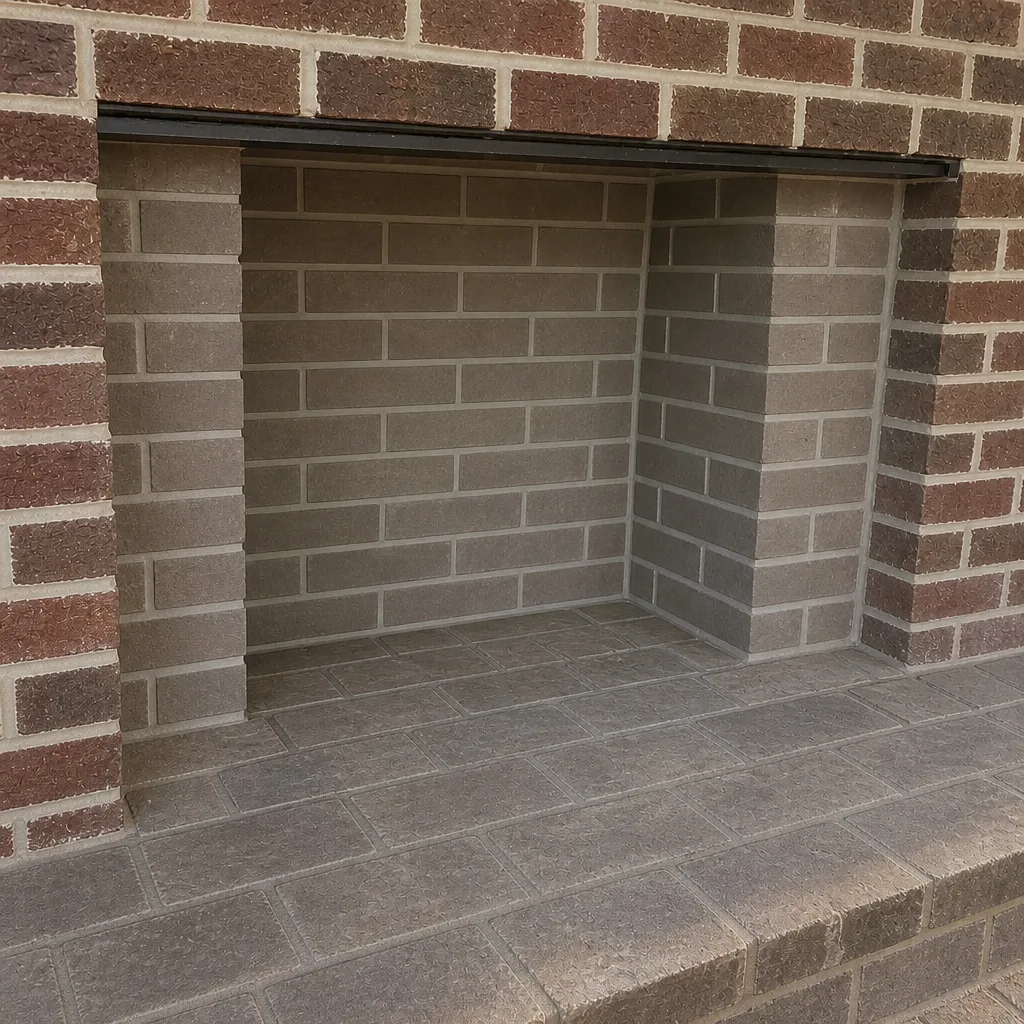
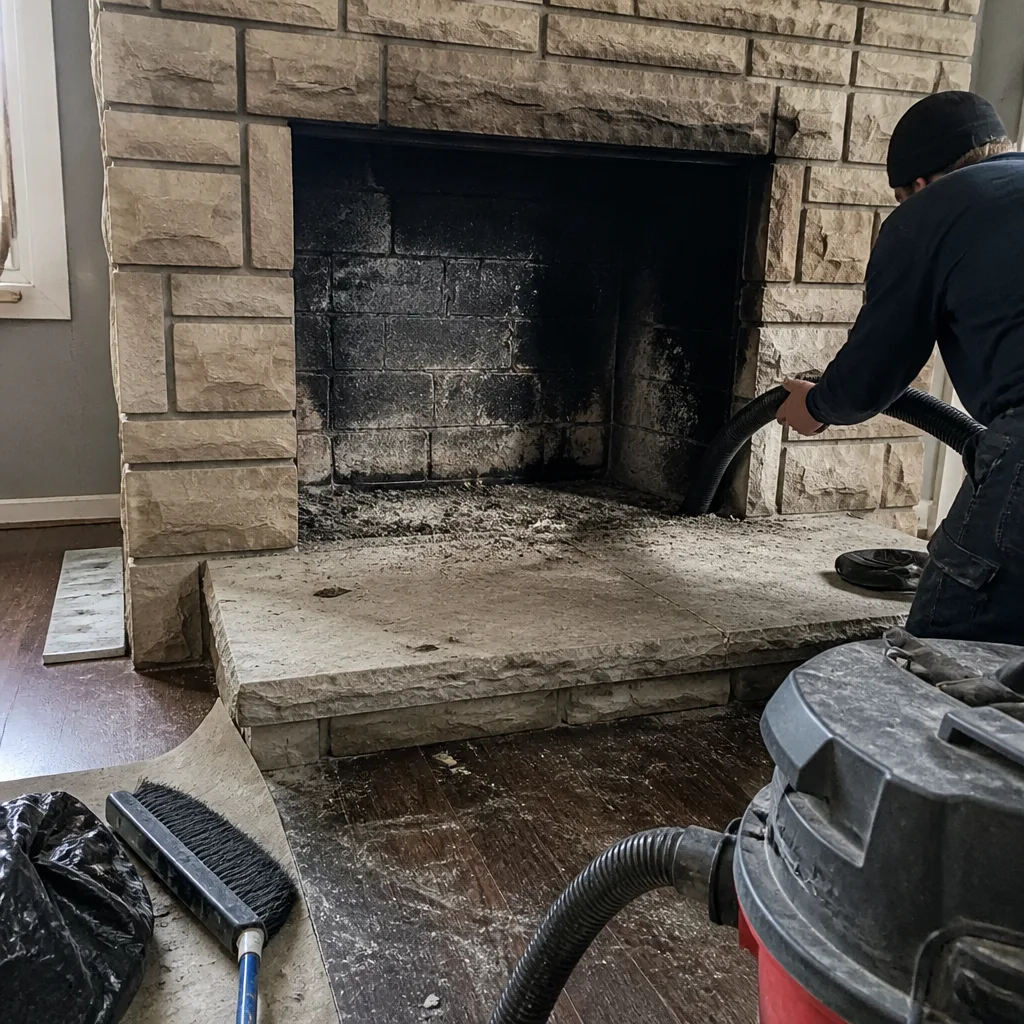
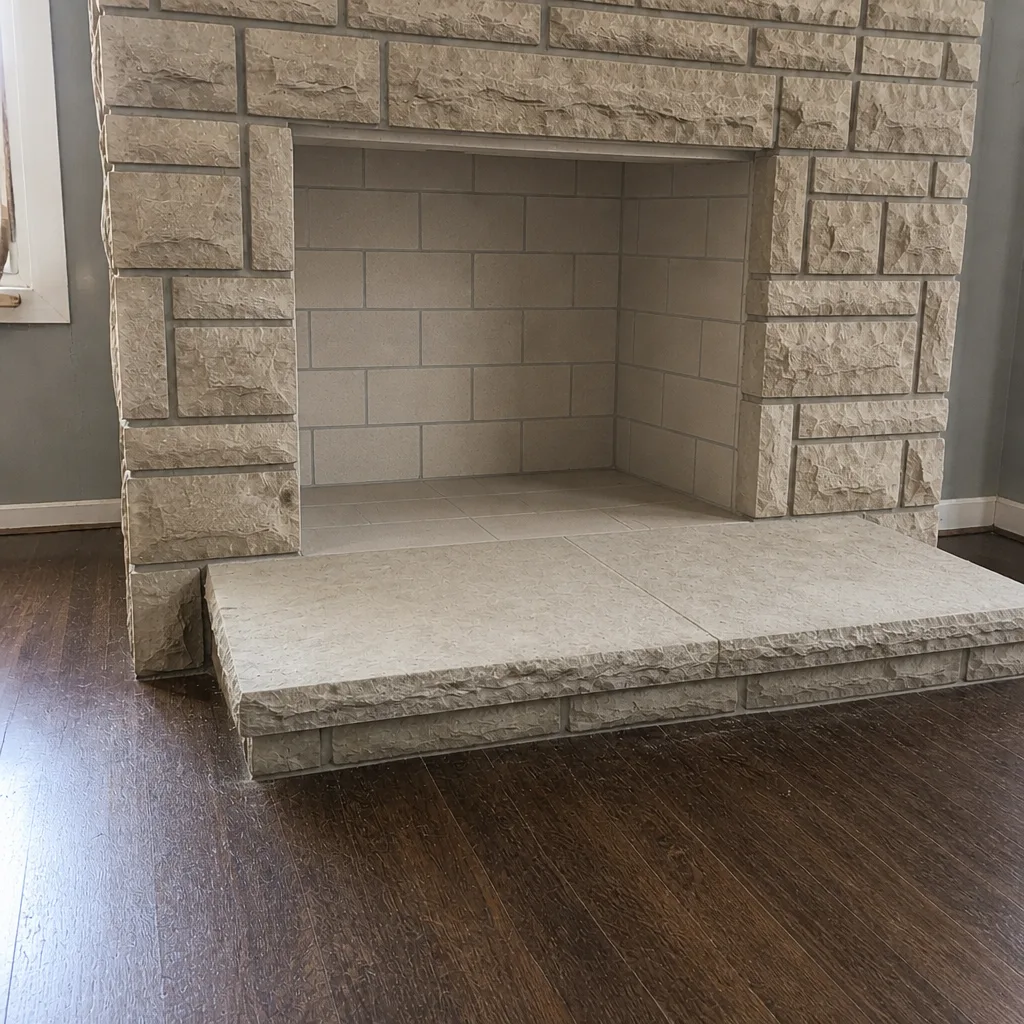
See the difference
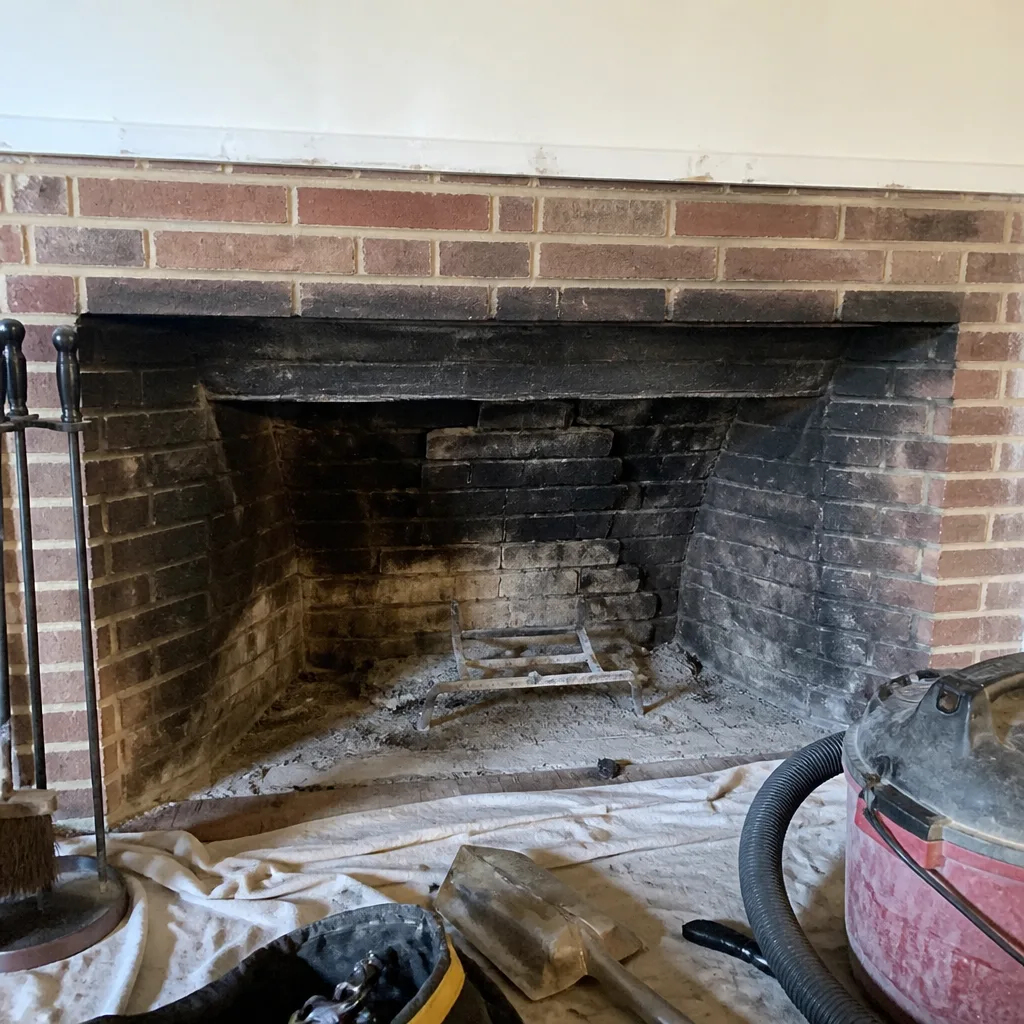 Before
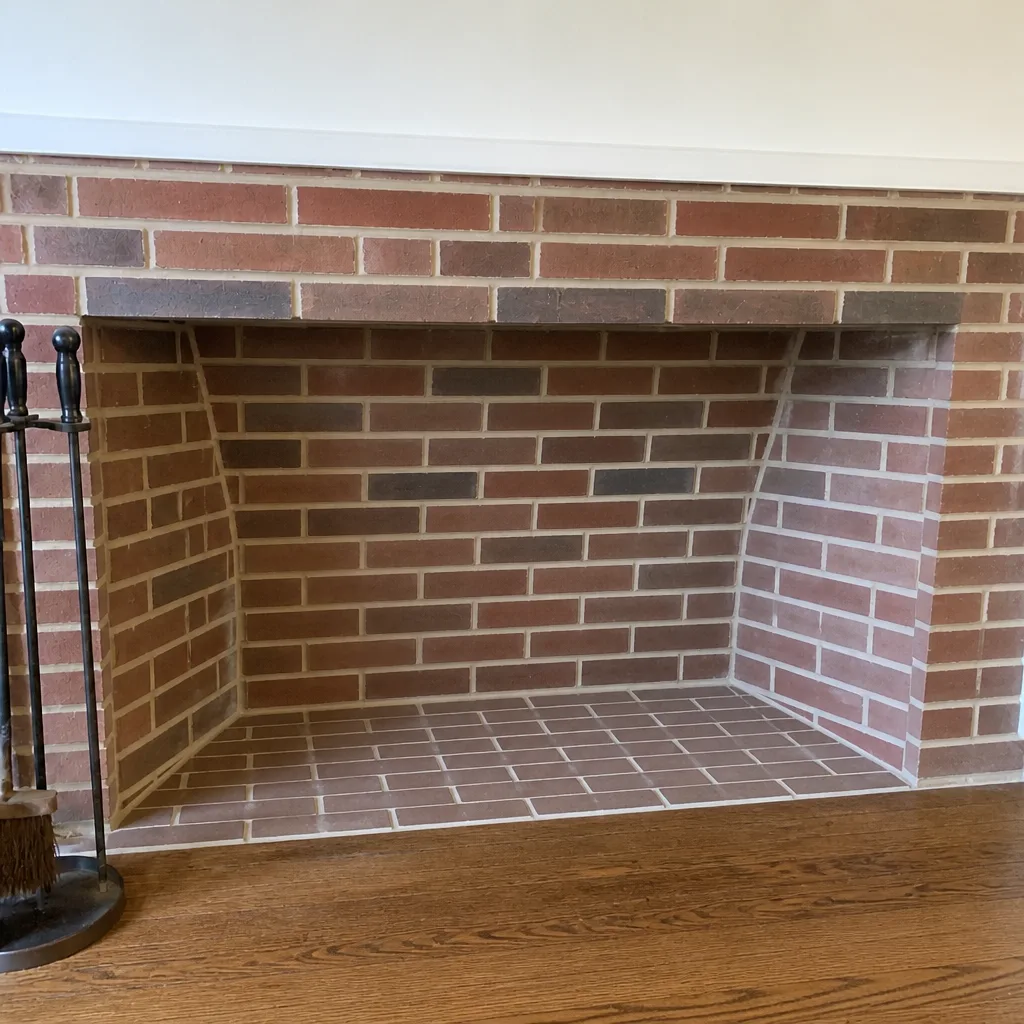 After
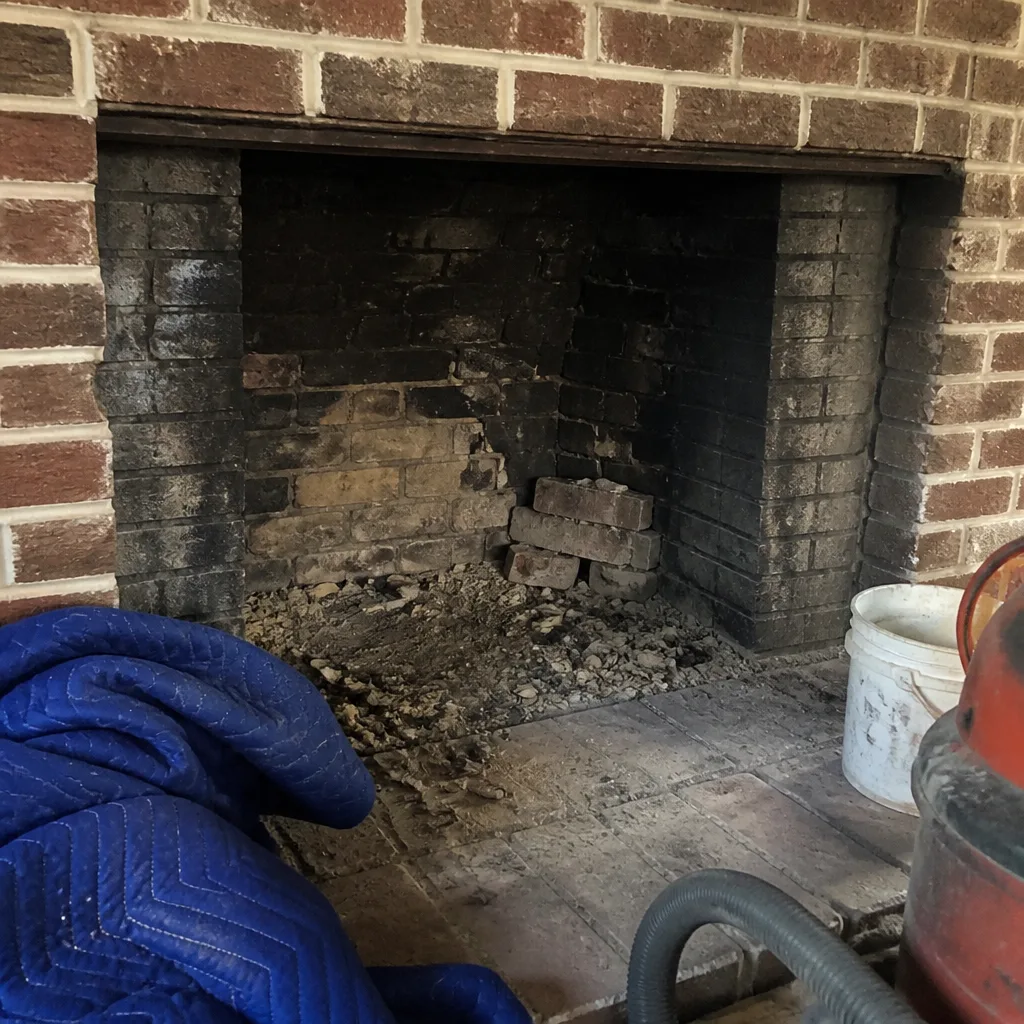 Before
 After
 Before
 After
When to Call a Professional
Call for an inspection if you are seeing any of the following: oil or asphalt smell (stop use immediately), rust on the damper plate, crumbling mortar inside the firebox with gaps or flaking, a summer smell that doesn’t clear, white staining on exterior brick, cracking in the firebox that shows daylight, or a fire that smokes into the room for more than a brief moment at start. Call after any chimney fire, even if you didn’t see flames, and call before the heating season starts if it’s been more than a year since your last inspection.
If nothing on that list matches but you haven’t had the chimney looked at recently, book an inspection anyway. An inspection with a camera shows you exactly what’s inside the flue, and our technicians have up to experience reading those conditions. Shoreline Chimney Sweep offers free estimates in Cleveland – call (844) 962-2617. We answer 24/7. Fast dispatch from 7am to 7pm, Sunday through Friday.
Frequently Asked Questions
The most common signs we see in Cleveland are summer fireplace odor (negative pressure), white efflorescence staining on exterior brick (water intrusion), rust on the damper plate (moisture penetration), and crumbling mortar inside the firebox (spalling). Any of these warrant a professional inspection. Some allow continued use pending an appointment; the firebox gap and oil smell signs do not.
A strong fireplace smell in summer usually points to negative pressure in the house, not a dirty chimney. The HVAC system competes with the flue for pressure, air comes down the chimney, and stale soot odors reach the living space. Sweeping won’t fix it. A top-sealing damper or a properly fitted chimney cap is often the effective fix, and a professional inspection identifies which. Call (844) 962-2617 for a free estimate – estimates are free in Cleveland.
Yes, a yearly inspection is the standard recommendation for any wood-burning appliance. The point isn’t to sweep every year; it’s to catch conditions in the firebox, flue, crown, and damper before they compound. In Cleveland’s freeze-thaw climate, a marginal condition moves faster than it does in warmer regions, so the yearly check is doing real work here. Call (844) 962-2617 to schedule.
Efflorescence is a white, powdery stain that wipes off and reappears. A more serious sign is a stain that is orange or brown, or a stain that combines with rust on the damper and dampness in the firebox. Those combinations point to structural moisture. When you call, describe both the exterior stain and any interior signs together. Call (844) 962-2617 – an inspection with photos will show you exactly what’s happening.
Not always. It can simply be damp air in the firebox. The sign that separates a leak from ordinary dampness is where the moisture shows up: rust on the damper, drips in the firebox after rain, or staining that appears in one concentrated band on the exterior brick. A leak that follows a specific defect (crown, flashing, cap) tends to concentrate; lake-effect saturation tends to spread. An inspection resolves it. Call (844) 962-2617 for a free estimate.
If the smell is strong and sharp, like asphalt or road tar, treat it as stage 3 creosote and shut the appliance down today. Do not light another fire until the flue has been inspected with a camera. A gas smell is a different matter: leave the house and call your gas utility. Once the appliance is confirmed safe, call (844) 962-2617 for an inspection.
The Bottom Line
Warning signs are a language. White efflorescence, summer odor, a black firebox, rust on the damper, crumbling mortar, an oil smell: each one is a signal pointing at a specific cause. Some signs mean the appliance is unsafe today, and some mean the appliance is fine but the clock is running on the structure. The single decision that matters is whether you describe the sign accurately enough to get the right diagnosis, and whether you act before water intrusion meets Cleveland’s freeze-thaw cycle. A camera inspection shows you what’s inside your flue, and a specialist can follow through on the repair rather than handing you a referral. That’s how a warning sign stays a warning sign.
Written by the team at Shoreline Chimney Sweep.
Ready to know exactly what’s going on with your chimney? Call (844) 962-2617 for a free estimate. We answer 24/7. Fast dispatch from 7am to 7pm, Sunday through Friday.