
Last updated November 15, 2026
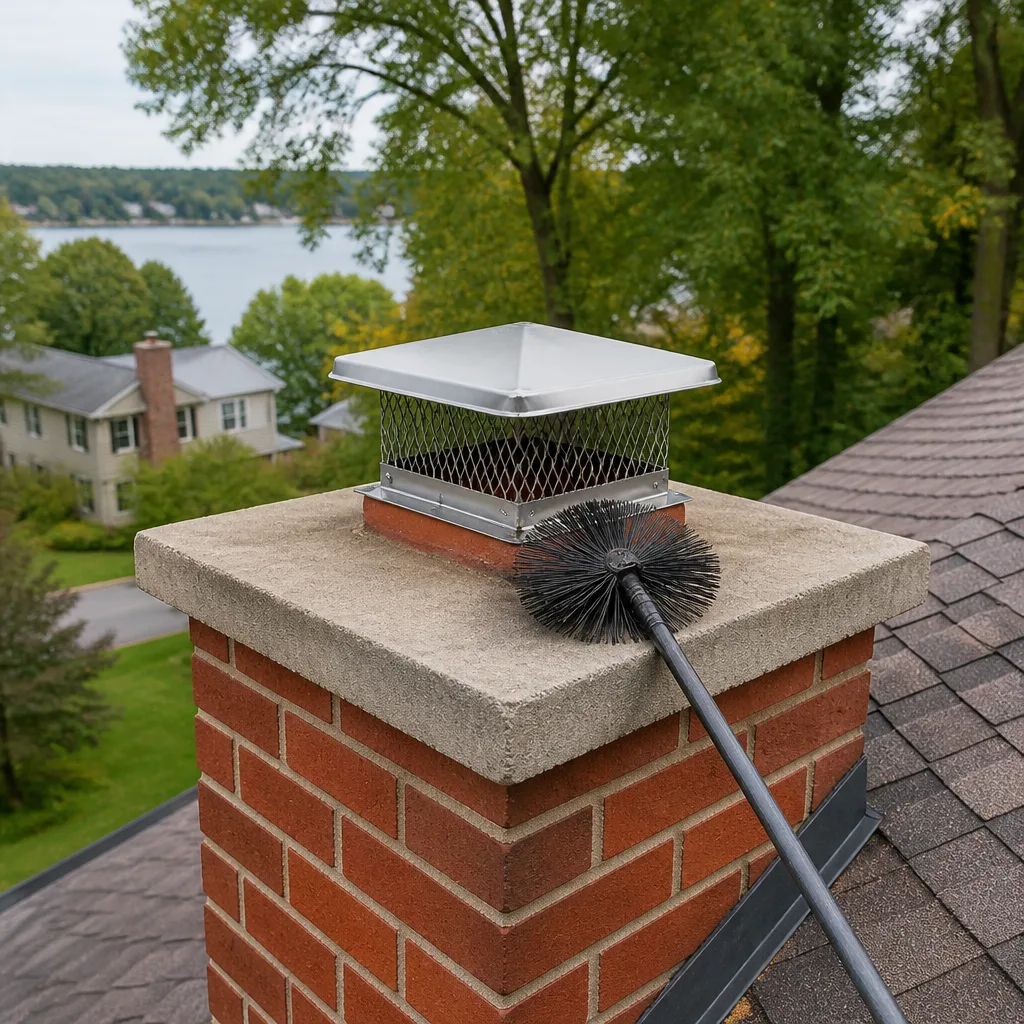 Sweep & inspection
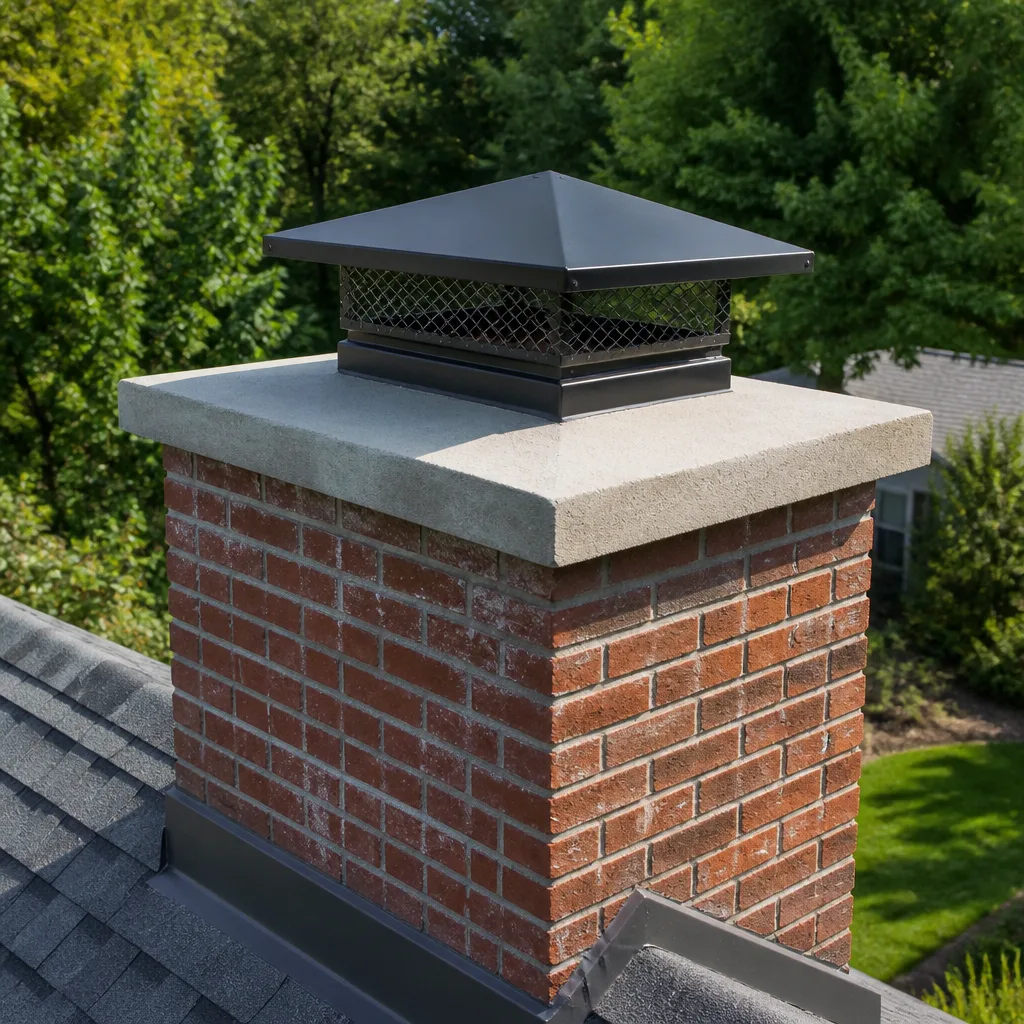 Caps & crowns
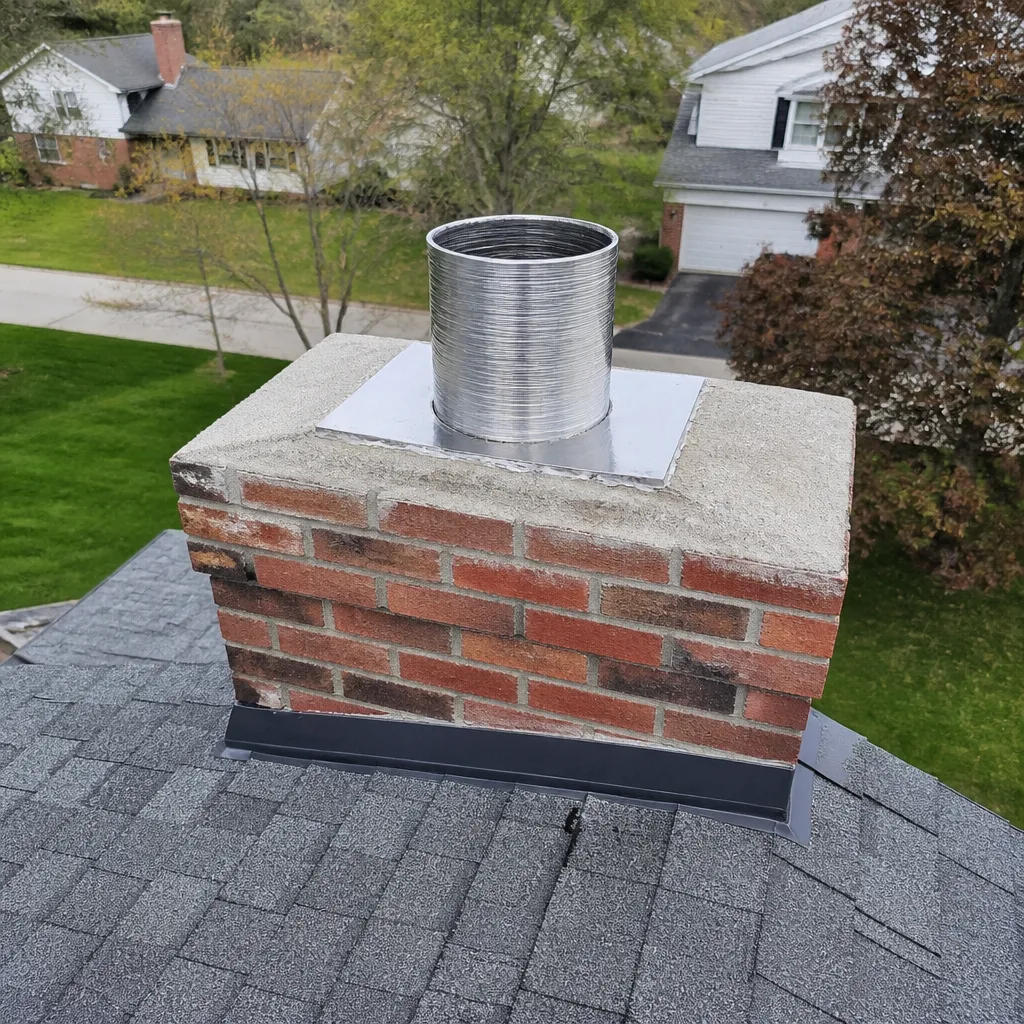 Flue relining
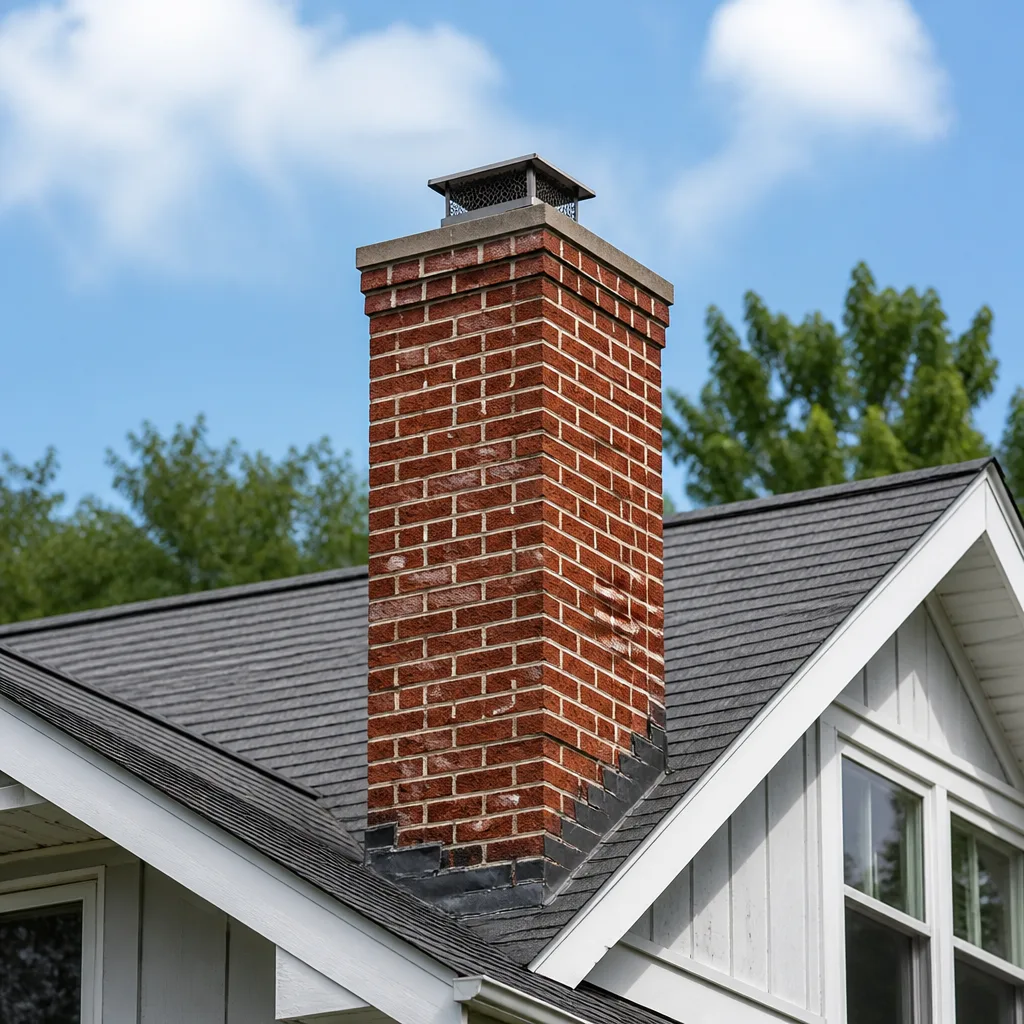 Masonry repair
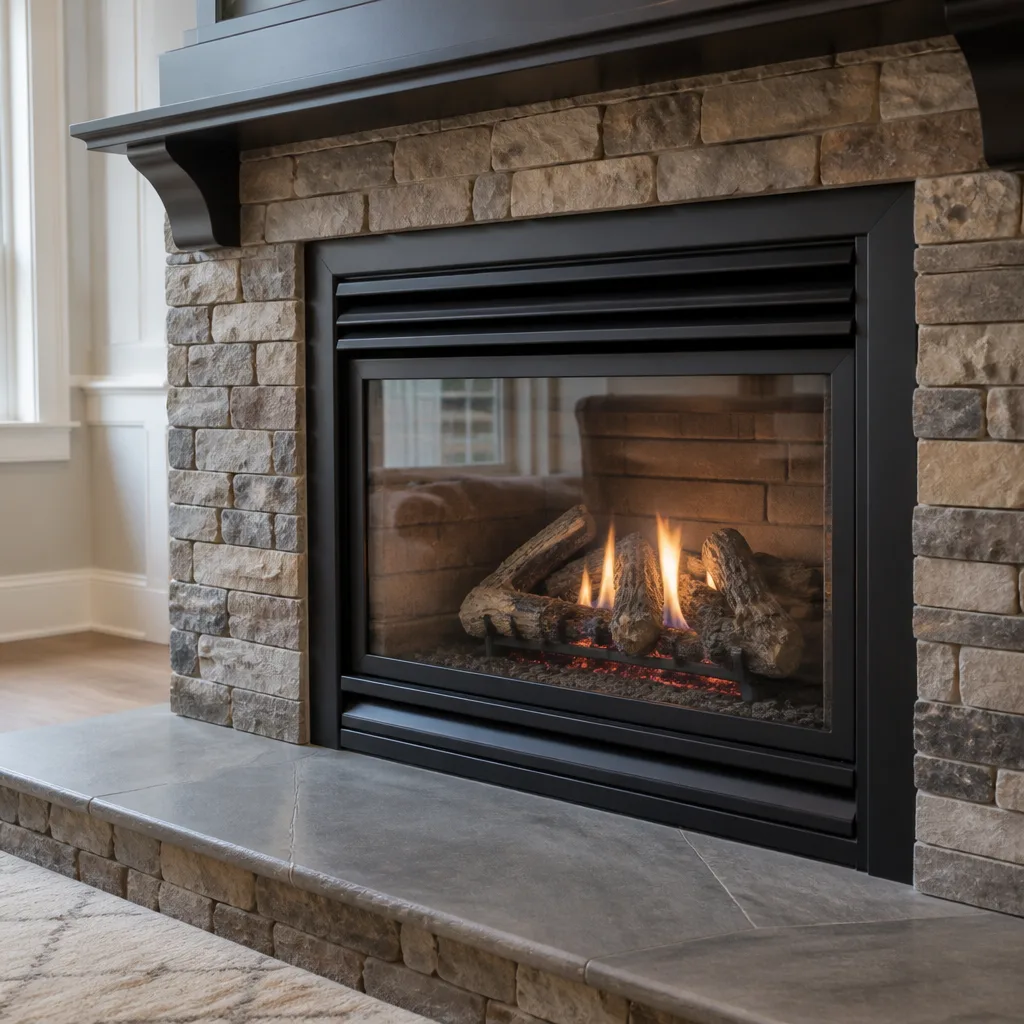 Gas fireplace service
Level 1 sweep and inspection to the NFPA 211 annual standard - flue, crown, cap, and flashing checked and photographed
Chimney sweep logs do not sweep chimneys. They loosen some creosote - which then falls where a brush and vacuum still have to collect it.
Choosing the Right Chimney Cleaning Brand: A Buyer’s Guide for Cleveland
Most homeowners think the brand question is about the name. It isn’t. The brand question that actually affects your chimney is about what’s inside the bucket, the caulking tube, and the mixer. A silicone sealer bought at a hardware store and a penetrating masonry water repellent a stocked specialist applies can look nearly identical going on. The difference shows up three winters later, when one has failed and the other is still working. Cleveland’s freeze-thaw cycle is unforgiving that way, and it’s the reason we wrote this guide. What follows is how to read the product side of a chimney quote, so you can ask real questions and get real answers.
Quick Answer
The right chimney cleaning “brand” in Cleveland isn’t a retail product line or a franchise name. It’s a contractor who can name the cleaning compounds, the refractory mortar, and the penetrating sealant they use, and why those specific products suit your chimney’s material and exposure. If a chimney company can’t name a single product on the quote, you’ve learned the most important thing about them before the work starts.
Styles & brands we work with
- Sweep & inspection
- Caps & crowns
- Flue relining
- Masonry repair
- Gas fireplace service
Table of Contents
- The product gap between retail and trade-grade chimney supplies
- The three product categories that actually matter
- Why trade-exclusive brands exist apart from retail lines
- How to ask a contractor what products they use
- Stainless steel versus cast-in-place liners in Cleveland homes
- How to read a warranty next to the products behind it
- What Cleveland’s climate does to chimney materials
The product gap between retail and trade-grade chimney supplies
Walk into any hardware store and you’ll find a shelf of chimney and masonry products. They work well enough for small touch-up jobs. They are not what a professional chimney company should be applying to a firebox or a crown, and the reason comes down to chemistry and how long the product is built to survive.
Take sealants, the most misunderstood category. A film-forming silicone sealer creates a coating on the masonry surface. It blocks water and looks effective for the first season or two. Then Cleveland’s freeze-thaw cycle finds its weak point: the coating cracks, water gets behind it, and the trapped moisture pushes at the masonry from the inside. A penetrating sealant works the opposite way. It soaks into the masonry pores and lines them, leaving the surface able to breathe. Water is repelled, vapor can still escape, and the treatment isn’t a fragile skin waiting to peel. In this climate, the working difference between the two is roughly three years versus ten. Same application motion. Very different lifespan.
The same gap shows up in repair mortars and cleaning compounds. Firebox and smoke chamber repairs need materials rated for the temperatures those surfaces actually reach. A standard mortar that holds a brick wall together will not hold a firebox together for long. Cleaning compounds vary too: some are formulated to modify creosote so it sweeps out more completely, and some are purpose-made to inhibit ignition of what’s left behind.
When you’re comparing companies, this is the first thing you can test. Ask what product they’ll use in each category, then see whether the answer is specific or a shrug. More on asking well is later in this guide. The point here is simple: retail products are built for occasional homeowner use. Trade products are built for service life in a real chimney, and that’s the standard your quote should meet.
The three product categories that actually matter
Most of a chimney service’s product decisions fall into three buckets. Knowing what each one does – and what to ask about it – is where a homeowner gets real leverage on quality.
1. Cleaning compounds
Creosote is the fuel behind most chimney fires, and it comes in stages. Fresh, flaky creosote sweeps out reasonably well with brushes alone. Glazed, baked-on creosote is harder and can require a chemical compound to loosen it before and after sweeping. There are also fire-suppressant products that can be introduced to reduce the ignition risk of remaining deposits. Ask your contractor whether they use a creosote modifier on heavy deposits and what they do if the glaze doesn’t come free with brushing.
2. Repair mortars
Firebox and smoke chamber repairs need refractory materials. Refractory means rated to withstand high heat without breaking down. Standard masonry mortar isn’t refractory, and using it in a firebox is a shortcut that fails sooner. Ask the contractor to name the mortar they use for firebox work and confirm it’s refractory. If the answer is “mortar from the supply yard,” push back.
3. Sealants
Penetrating masonry water repellent is the correct product for a chimney exterior. Ask whether the sealant they use is penetrating or film-forming. A company that applies a surface coating because it’s fast is treating the symptom and creating a future problem. The penetrating approach is what keeps water out of Cleveland masonry through winter without trapping moisture in it.
The pattern across all three is the same: professionals in this trade are buying from product lines built for the job, not the home center shelf. When a quote names those products, the price starts to make sense.
Why trade-exclusive brands exist apart from retail lines
If trade products are so much better, why isn’t the strongest version on the shelf at the hardware store? Three good reasons: the products need trained hands to apply correctly, they’re sold in professional quantities, and they carry warranties that only make sense for professional installation. A cast-in-place liner system isn’t a product a homeowner buys and applies on a weekend. It’s a material a trained installer forms inside the flue.
This is the landscape our material roster lives in. The brands we stock and install from include DuraFlex for flexible stainless liner systems, HeatShield for flue liner restoration, Gelco for refractory materials, Olympia Chimney for liner and venting components, and Famco and Copperfield for chimney-specific repair materials. Naming those brands here isn’t a sales pitch. It’s the transparency this guide is asking you to demand from any contractor, ourselves included.
The performance differences that justify the price point are concrete:
- Heat rating: trade refractory materials hold up at firebox temperatures in ways standard masonry products do not.
- Service life: penetrating sealants and liner systems are formulated for measured lifespans rather than seasonal fixes.
- Warranty backing: trade lines carry system warranties that depend on professional application, which is exactly the level of accountability you want on a chimney.
Cleveland homeowners are often comparing quotes where the numbers are close but the products aren’t. Two jobs can cost the same and last differently. The product names on the quote are how you find out which is which.
How to ask a contractor what products they use
The trick to asking about products without sounding like a homework assignment is to frame it as wanting to understand the plan. Most contractors who use professional materials are happy to explain. It’s the ones who can’t or won’t that you’re screening out.
A five-question script, in order:
- “What product will you use for each part of the job?” – If the quote has cleaning, sealing, and repair lines, you want a name for each. Not necessarily a brand in every case, but a product description that isn’t a shrug.
- “Is the sealant penetrating or film-forming?” – A straight answer to a straight question, and it tells you whether the contractor knows the difference or just applies what was on hand.
- “What’s the firebox mortar rated for?” – Refractory is the word you’re listening for. Any hesitation is your answer.
- “If you reline, what system and why do you prefer it for my flue?” – The “why” matters more than the name. Different flues call for different systems.
- “What does the warranty cover and for how long?” – Product warranties from professional lines tend to be specific. Generic “we stand behind our work” language isn’t a warranty.
Answers that should raise a flag
“We use whatever works” is not an answer. Neither is “chimney sealant” with no product name available, or a quote that lists repair costs with no material description at all. Those aren’t just poor communication. In our experience they tend to predict short-lived work. A chimney repair done with consumer-grade materials can look fine at handover and fail within a few winters, which means you’ve paid twice.
Compare the answers against the products in the quote. If a company can’t name what’s going in your chimney, you’ve learned the most important thing about the quote before you’ve signed anything.
Stainless steel versus cast-in-place liners in Cleveland homes
The liner decision is the most consequential product choice in chimney work, and it’s not a one-answer question. The right system depends on your flue’s condition and geometry, and Cleveland’s housing stock – much of it older, with flues that were built to very different standards than today’s appliances expect – throws up conditions that make the choice matter.
Here’s how the two main approaches differ:
Stainless steel flexible liners
A flexible stainless liner is a continuous metal tube inserted through the flue. It’s appropriate when the existing flue is sound enough to hold the liner in place, and it’s a strong option for chimneys that are unlined or have cracked tile. The flexible construction lets it follow the flue’s route, including offsets. DuraFlex is the brand we use for flexible liner installations, and it suits many of the older homes around Cleveland where flues change direction partway up.
Cast-in-place liner systems
A cast-in-place system forms a new flue lining inside the existing chimney using a form and a proprietary refractory mix. It’s appropriate when the flue has deteriorated in ways a stainless liner alone won’t solve, or when the geometry or size of the flue makes a cast system the better fit. HeatShield liner restoration is the approach we work with, and in some cases it restores a compromised flue without a full rebuild. That’s a higher-skill solution than a basic sweep company can offer, and it’s often the difference between a repair and a construction project.
Which suits which Cleveland home
The two conditions that push toward each option most often in Cleveland:
- Offsets: flues that bend or step before reaching the top put a premium on flexibility, which favors a stainless liner.
- Oversized flues: older masonry chimneys sometimes have flues much larger than a modern appliance needs, which can affect draft and may favor a cast system that brings the flue to a workable size.
- Deteriorated tiles: if the tile liner is failing, the repair might need cast restoration or full relining rather than a sweep and a sealant.
The only way to choose correctly is to look inside. A camera inspection tells you what material and geometry you’re working with, and from there a written plan with a named system is possible. Any quote that proposes a liner without that inspection is guessing.
How to read a warranty next to the products behind it
A warranty is only as strong as the materials behind it. A five-year warranty on a chimney repair backed by professional-grade materials is a different instrument than the same five years backed by consumer-grade products. Both read “five years” on the page. One means the product is expected to last beyond that window, and the other means you’re likely to need the warranty before it ends.
Three questions to ask about any warranty:
- “What’s covered – the product, the labor, or both?” – The best of both. Labor is where cost lives, and a labor-only or product-only warranty covers half the risk.
- “Who honors it?” – A manufacturer-backed warranty from a professional line is independent of the contractor. A handshake warranty is not.
- “What voids it?” – Standard exclusions like unrelated water damage or work by another contractor are fine. A vague or overly broad exclusion list can make the warranty meaningless.
The warranty conversation is a good place to close the loop. If the contractor has named professional materials throughout – refractory mortar in the firebox, penetrating sealant on the crown and stack, a DuraFlex or HeatShield system in the flue – the warranty should reflect that. If the warranty is strong but the products are unnamed, ask why. The mismatch is worth clarifying before you sign.
This is also where single-specialist service pays off. When inspection, sweeping, and repair all come from one company, the warranty for the whole job sits with one accountable party. When the sweep refers you to a separate repair contractor, the warranty line is split. For reference, you can read about how chimney repair is handled start to finish on our Cleveland service pages.
What Cleveland’s climate does to chimney materials
Cleveland chimneys live through a real winter. Freeze-thaw cycles repeat for months, which means any water that gets into masonry expands when it freezes and does damage when it thaws. That cycle repeats all season, and the materials you choose either resist it or fail to it. This is the clearest local reason to care about product grade.
The damage pathway is specific:
- Water enters at the crown, the flashing, or the chimney stack, often through hairline cracks in the masonry.
- Freeze-thaw pushes those cracks wider over the season, which speeds the next round of water entry.
- Spalling is what you see when the masonry face flakes or chips off, and it’s a sign the cycle has been running for a while.
- Interior damage follows, including crumbling mortar joints and rusted or cracked flue tiles.
A film-forming sealer can accelerate this rather than slow it, because it traps moisture in the masonry. A penetrating sealant turns the surface water-repellent without trapping vapor, which is why the trade-grade products used by a stocked specialist are the better match for a Cleveland climate.
The same principle applies inside the chimney. Refractory materials that hold up at firebox temperatures and liner systems designed for the long service life are not luxury items here. They’re what the local weather calls for. When you’re evaluating a quote, ask whether the products being applied are chosen for a climate like this one. A company that can explain that choice is a company that has thought about what Cleveland does to chimneys. More on the Cleveland side of the work is on our city page.
Common Mistakes to Avoid
- Buying a “chimney sealing kit” from retail and applying it yourself. The film-forming products on those shelves can trap moisture and worsen freeze-thaw damage in Cleveland masonry. If the crown or stack needs sealing, ask what a service applies and why it’s different.
- Accepting a quote with no product names on it. A line item that says “chimney repair” with no material description can’t be compared to anything. Ask for the product names and systems before signing.
- Choosing a liner without an inspection. Stainless and cast-in-place systems suit different flues, and Cleveland’s older housing stock has both cases. A quote that proposes a liner without seeing inside the flue is guessing.
- Assuming a long warranty means reliable work. Five years on consumer-grade materials is not five years on professional materials. Ask what’s behind the warranty.
- Hiring a generalist who also does chimneys. A handyman sweep may use products that weren’t formulated for firebox heat or chimney exposure. Chimney-only specialists build their material roster around the trade.
- Skipping the camera inspection because a sweep “looks fine from the top.” Interior flue condition and firebox integrity need to be seen up close, and the evidence should be shared with you.
- Assuming the cheapest quote used the same materials as the highest. Close quotes with different product names are not the same quote. Compare the materials, not just the totals.
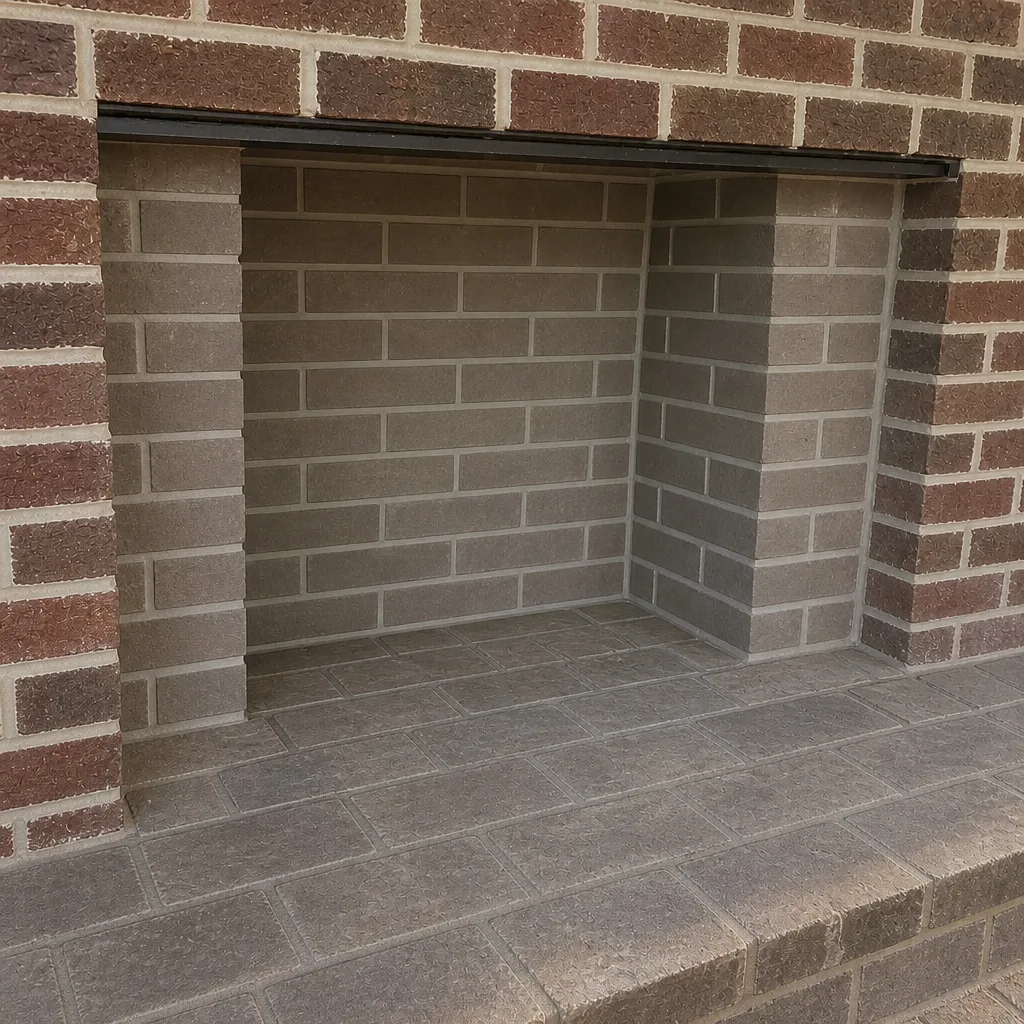
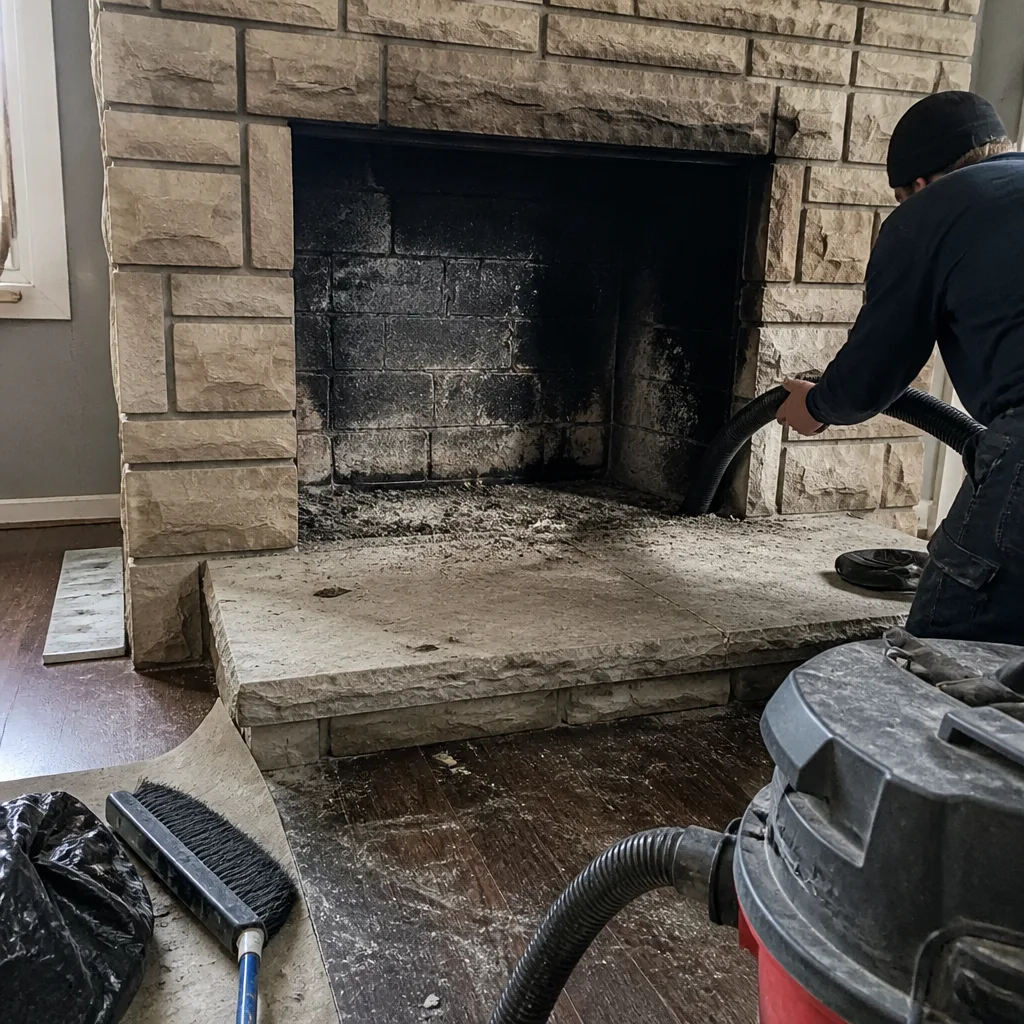
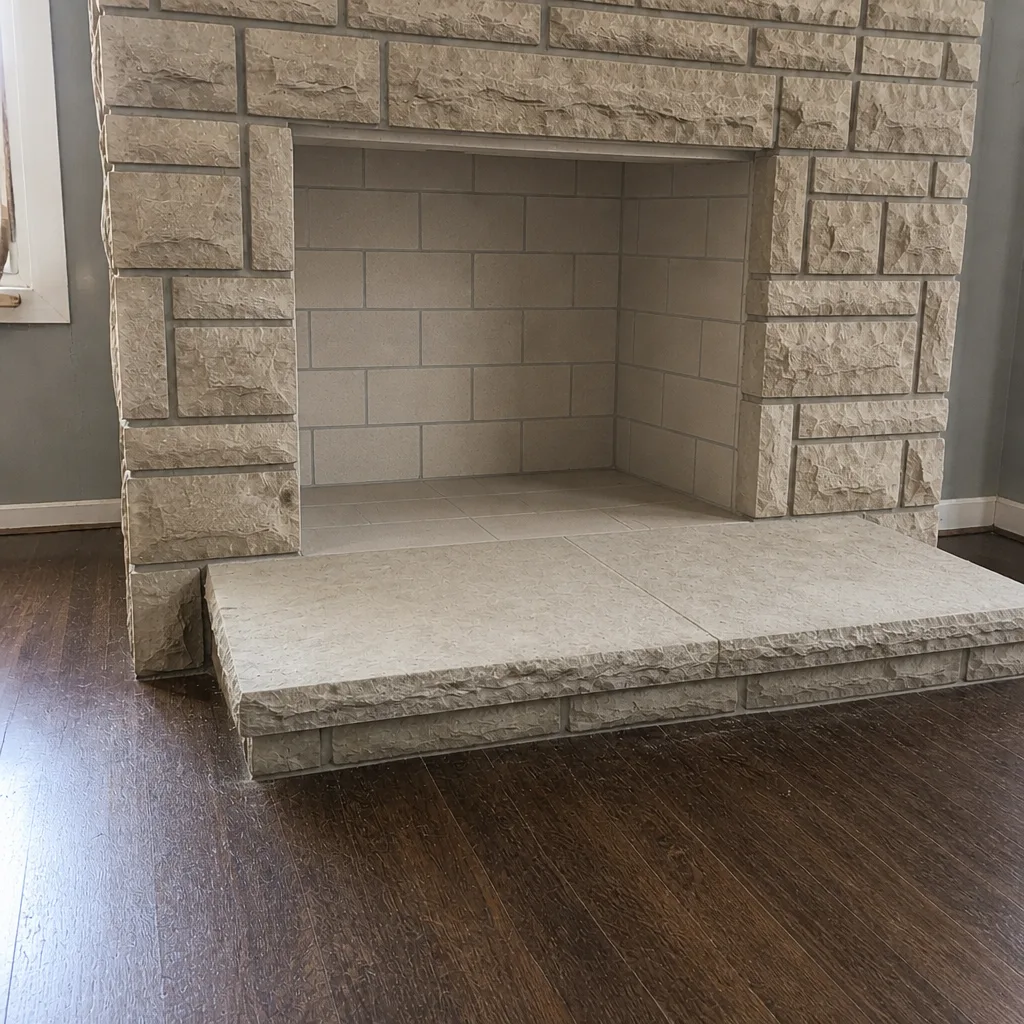
See the difference
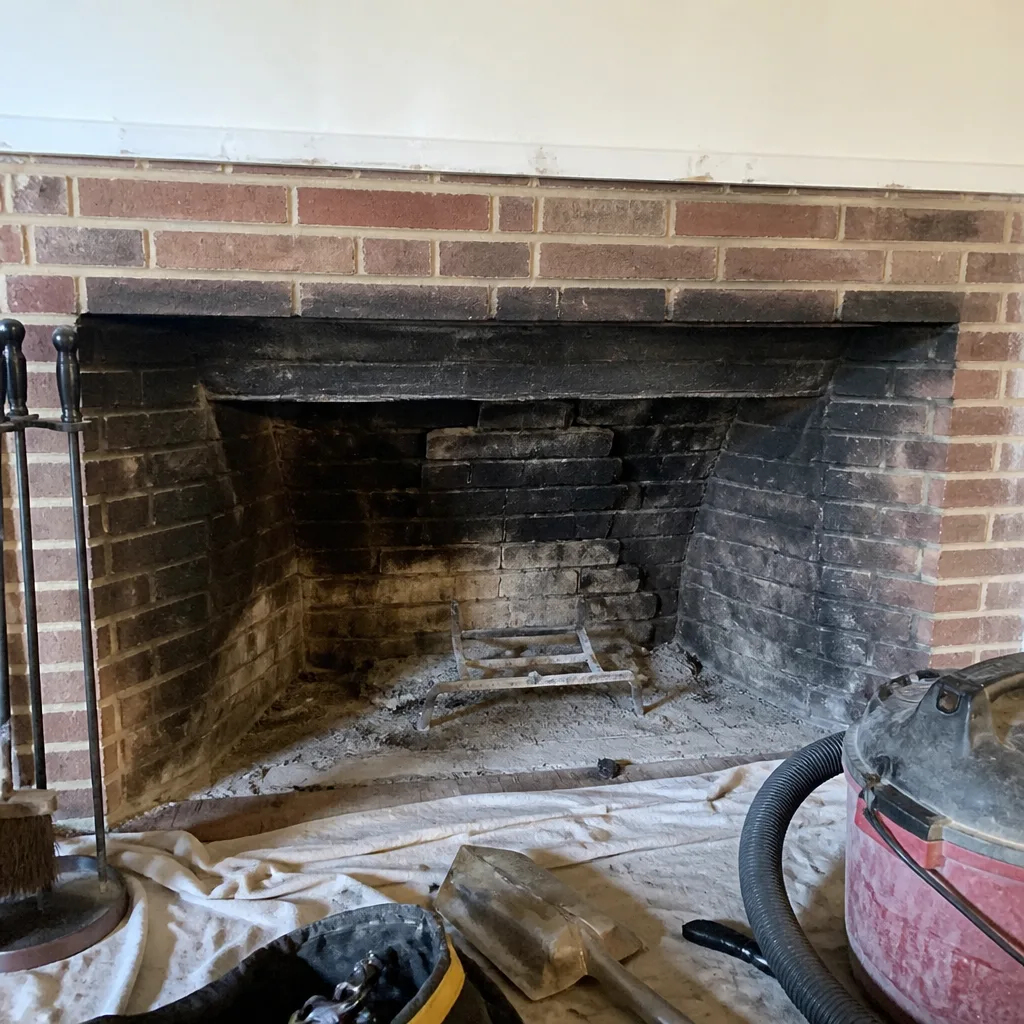 Before
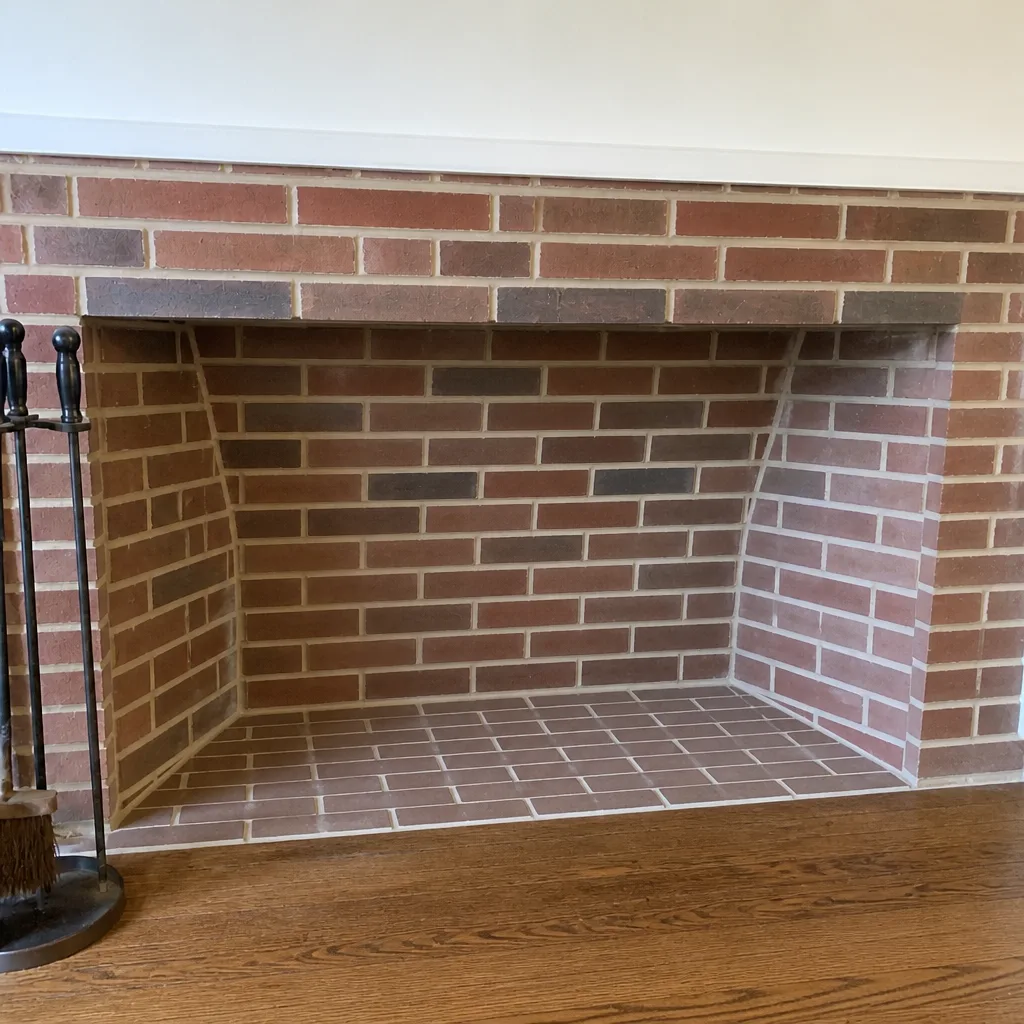 After
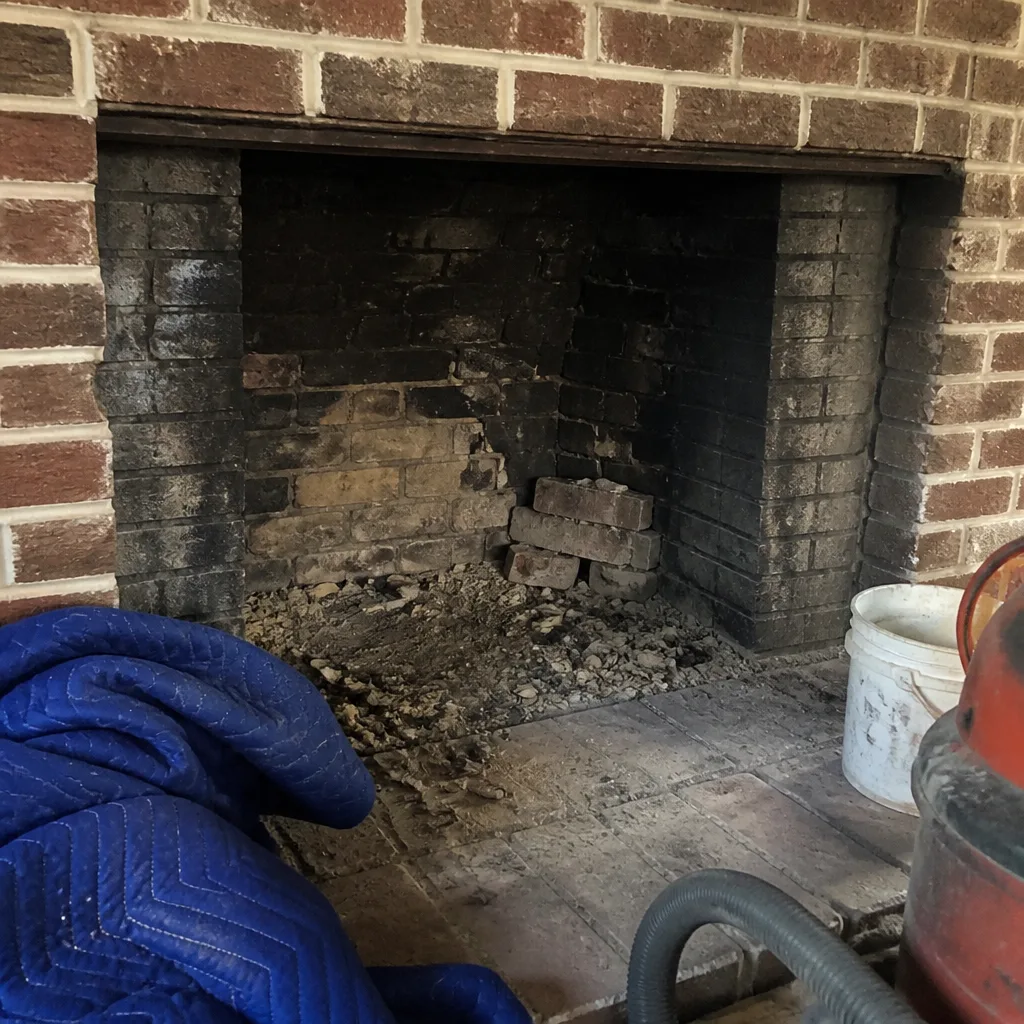 Before
 After
 Before
 After
When to Call a Professional
Some jobs are worth a closer look before anything is decided. Call a professional chimney service if you see crumbling mortar inside the firebox or at the crown, rusted or missing damper parts, cracked flue tiles, or visible creosote glaze on the flue walls. If your appliance drafts poorly, smokes into the room on light-up, or you smell a strong odor on mild days, that’s a sign to inspect rather than wait. If the chimney has no liner and you’ve switched or plan to switch to a modern stove or insert, that’s a reline conversation, not a sweep. If you’ve had a chimney fire, even a small one, an inspection is the right next step before using the fireplace again.
Shoreline Chimney Sweep offers free estimates in Cleveland – call (844) 962-2617. We inspect, clean, and repair with one company, and nothing is recommended without camera evidence you can see for yourself. Our technicians have up to experience.
Frequently Asked Questions
It means asking which products the company applies, not just which company name is on hand. In Cleveland’s freeze-thaw climate, the difference between a penetrating sealant and a film-forming one is roughly three years of service life versus ten. Ask for product names on each line of the quote and confirm the firebox mortar is refractory. If the answers are specific, you’re dealing with a professional materials roster. If they aren’t, you’re not.
Maybe, maybe not, and the honest answer depends on what a camera inspection shows. A stainless flexible liner is often right for an unlined or cracked-tile flue in an older Cleveland home, especially one with offsets. A cast-in-place restoration can be the better choice when the flue is deteriorated in ways a simple liner won’t fix, and in some cases it avoids a full rebuild. If you’re told a liner is needed, ask to see the inspection video and the specific system being proposed. Call (844) 962-2617 for an exact quote – estimates are free.
Typically once a year if you burn regularly, or more often if you burn a lot of green or soft wood. The annual sweep is also the natural time for the inspection, since the cleaner flue makes the camera check more useful. If you’ve moved into a new home and don’t know the last service date, get the first one scheduled sooner. Cleveland’s seasons are long enough that putting off a sweep means creosote has another year to build.
Creosote builds up in layers, and glazed creosote is what fuels chimney fires. A blocked or partly blocked flue also affects draft, which means smoke and carbon monoxide can back up into the room instead of going up the chimney. Neither of these is a reason to panic, but both are reasons to book the annual service. A camera inspection will show you what’s actually inside, which is more useful than guessing. Call (844) 962-2617 for an exact quote – estimates are free.
Not the same product, in almost every case. Retail sealants tend to be film-forming products built for occasional homeowner touch-up work. The penetrating masonry water repellent a stocked chimney specialist applies is a different formulation, and it’s chosen specifically because it works from inside the masonry pores outward without trapping moisture. If you’re considering sealing a crown or a stack, ask a chimney company what they’d use and why. The answer tells you what your retail shelf is missing.
Ask three things: what’s covered (product, labor, or both), who honors it (manufacturer-backed or handshake), and what voids it. Manufacturer-backed warranties from professional product lines stand apart from a contractor’s promise, because the product itself is part of the instrument. If a company is applying trade-grade materials throughout, the warranty should reflect it. If it isn’t, the warranty is doing more work than the products underneath. Call (844) 962-2617 for an exact quote – estimates are free.
The Bottom Line
The brand that matters in chimney cleaning is the product brand and the system brand behind the work, not the name. Look for a company that can name the cleaning compounds, the refractory mortar, and the penetrating sealant they’ll use, and that can explain why each is right for a Cleveland chimney. Ask whether a liner is stainless or cast-in-place and why that choice suits your flue. Read the warranty next to the materials it covers. When one company owns the inspection, the sweep, and the repair, the warranty and the materials line up with one accountable party. That’s the question worth asking before you sign.
When you’re ready to talk through what’s actually in your chimney, our team at Shoreline Chimney Sweep is here to help. We inspect, clean, and repair – handled start to finish. Call (844) 962-2617. We answer 24/7. Fast dispatch from 7am to 7pm, Sunday through Friday. Estimates are free, and the price is set per job by the written estimate.
Written by the team at Shoreline Chimney Sweep.