
Last updated November 15, 2026
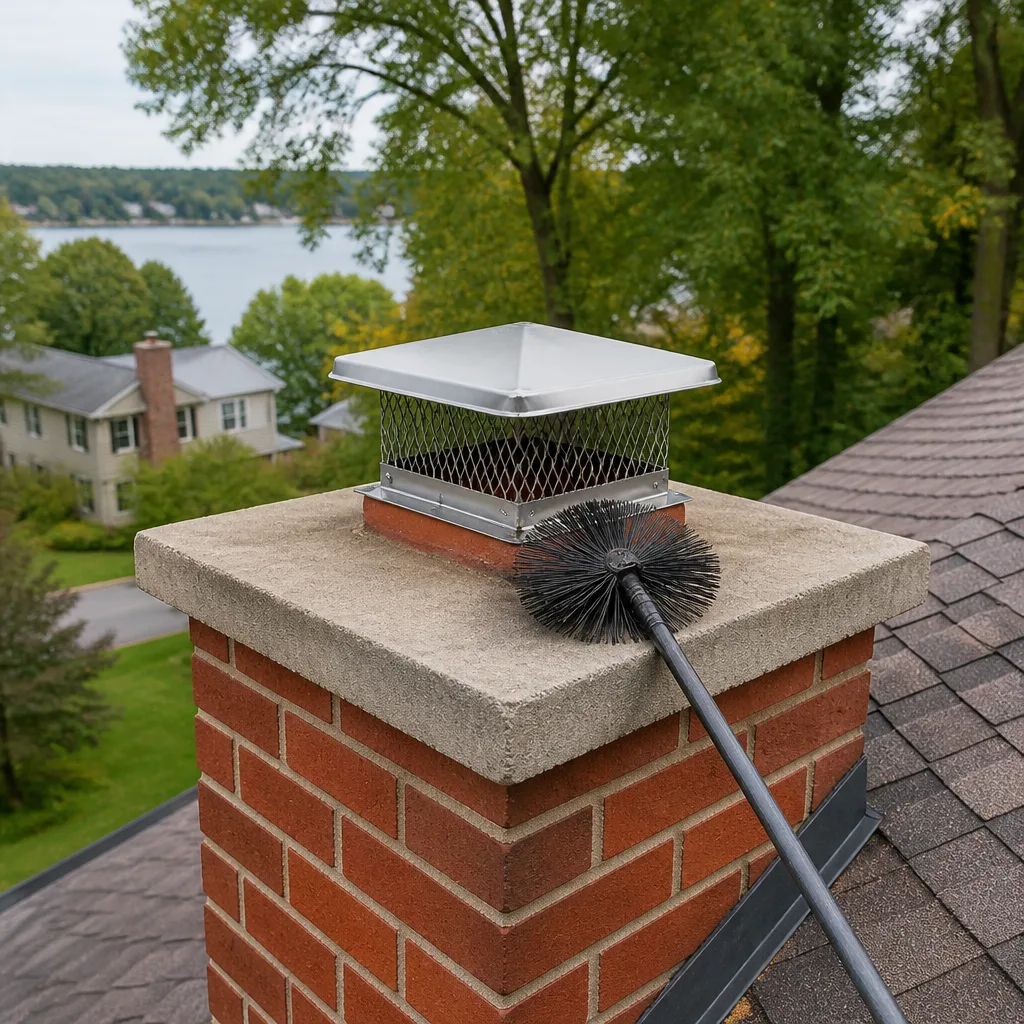 Sweep & inspection
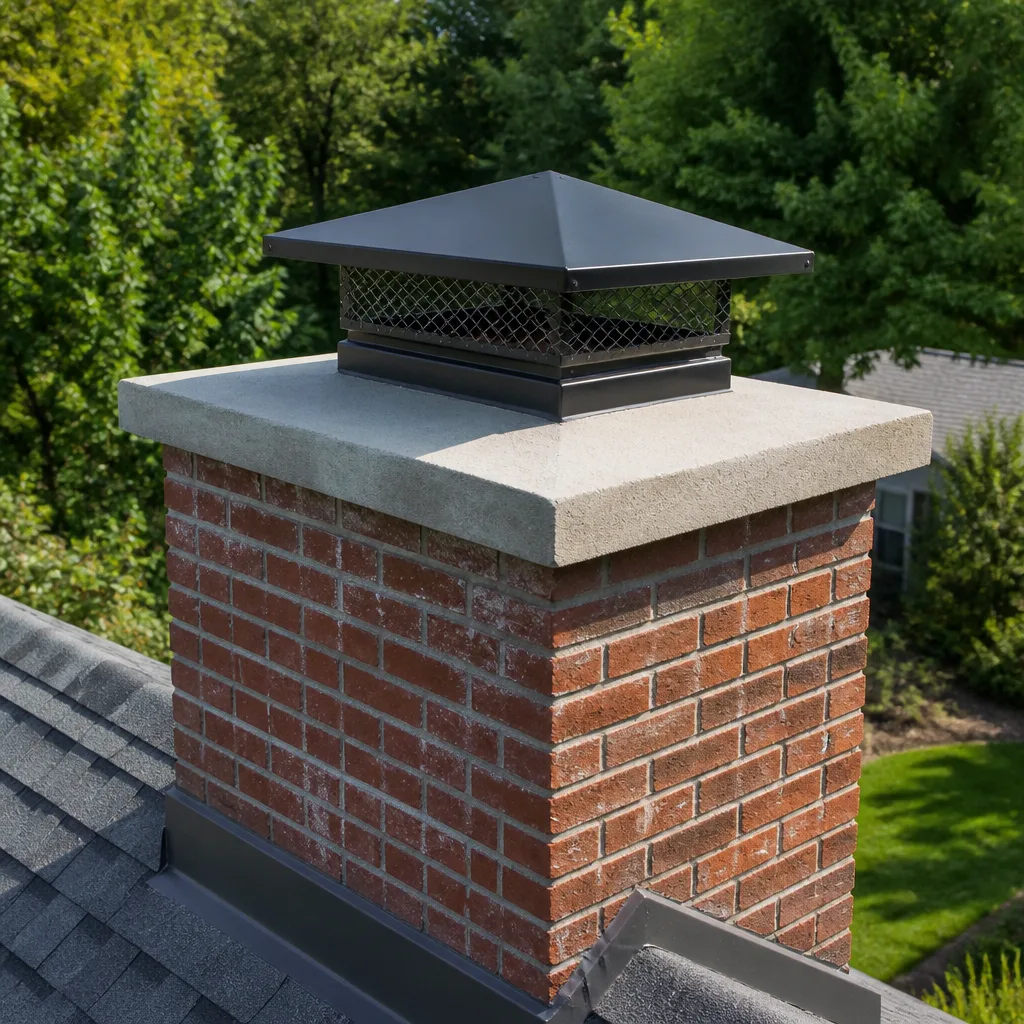 Caps & crowns
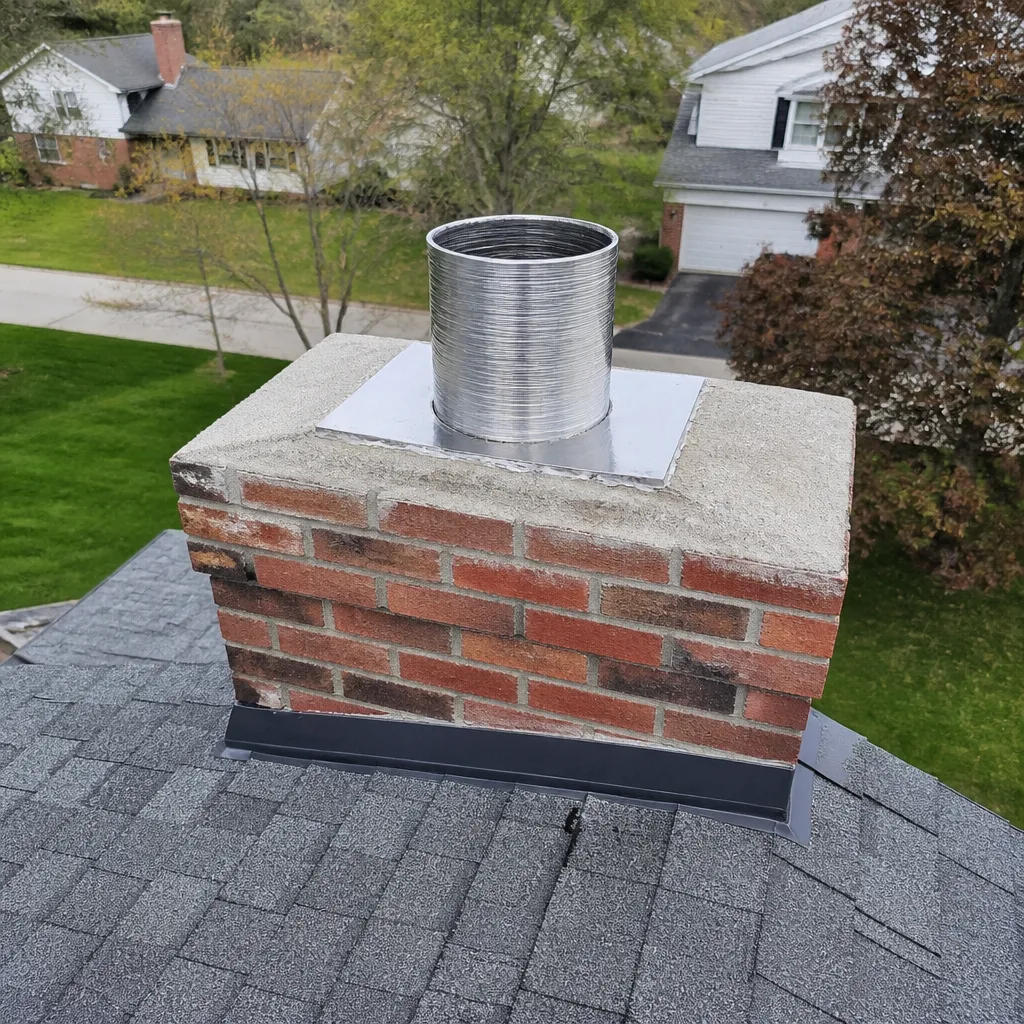 Flue relining
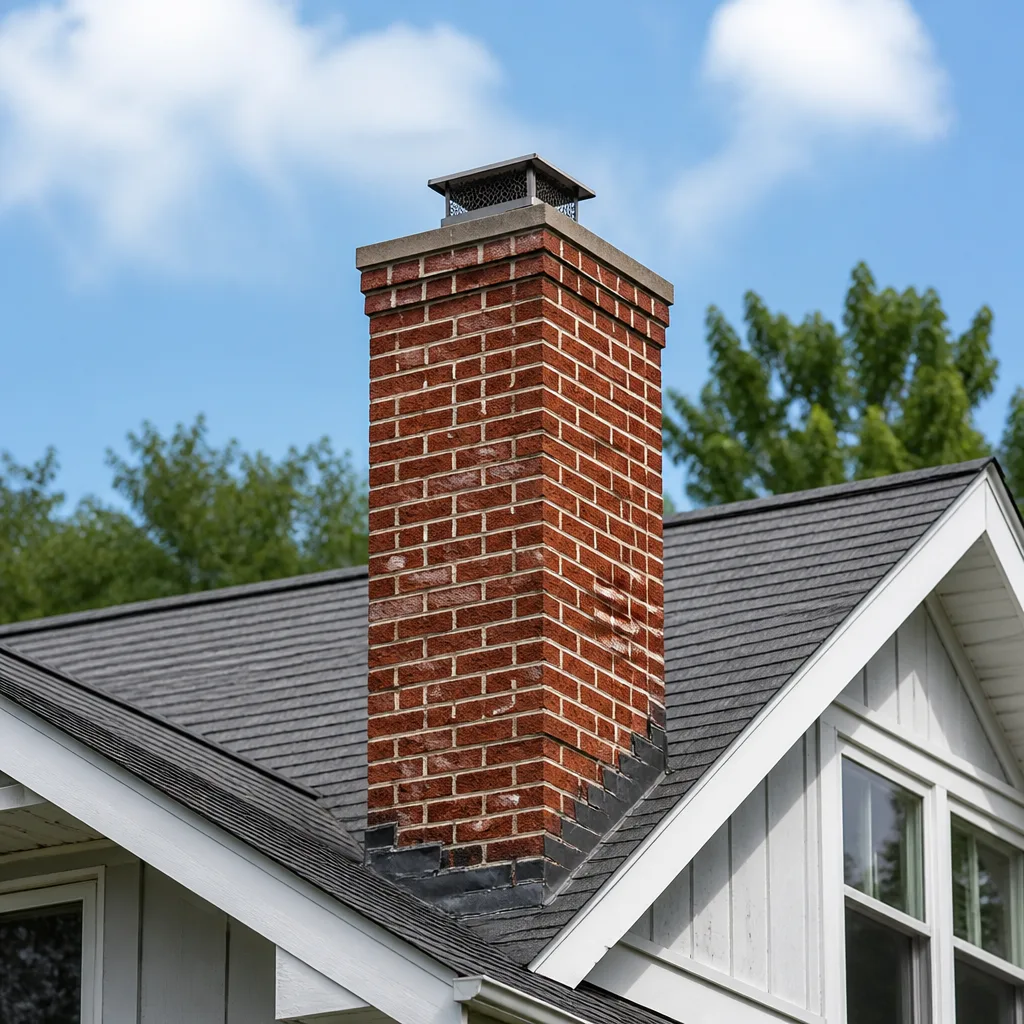 Masonry repair
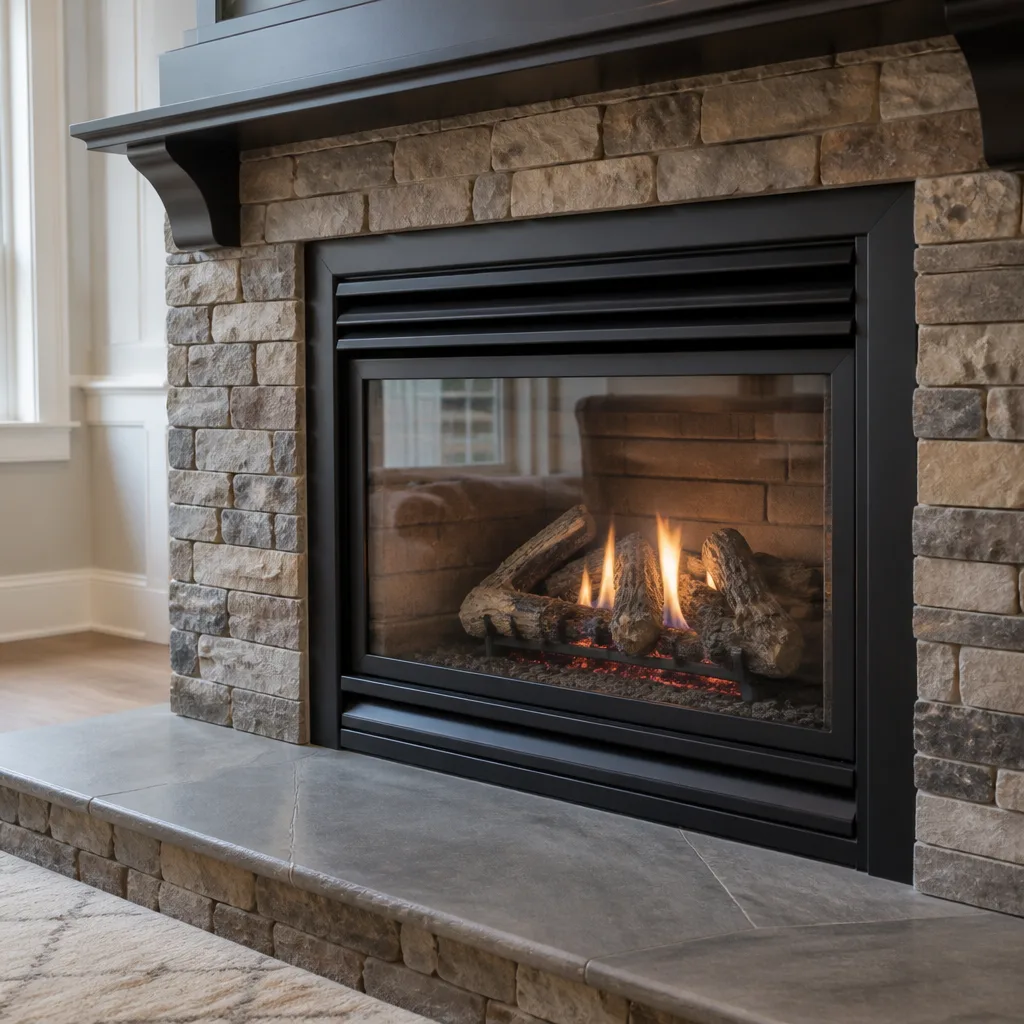 Gas fireplace service
Level 1 sweep and inspection to the NFPA 211 annual standard - flue, crown, cap, and flashing checked and photographed
Chimney sweep logs do not sweep chimneys. They loosen some creosote - which then falls where a brush and vacuum still have to collect it.
Chimney Cleaning Emergency Preparedness Guide for Cleveland Homes
Most homeowners think chimney preparedness means keeping an extinguisher within reach. In practice, the emergencies that send firefighters into Cleveland homes start weeks or months earlier, inside a flue that looked perfectly fine from the living room. A chimney fire in a brick chimney can reach temperatures high enough to fracture liner tiles and open gaps in mortar joints, and the chimney may still look structurally intact from the outside afterward. This guide works backward from the three emergencies we see most in Cleveland, Ohio – chimney fire, carbon monoxide intrusion, and sudden blockage – and shows the cleaning and maintenance steps that stop each one before it starts.
Quick Answer
Chimney emergency preparedness in Cleveland means three things: keeping creosote below its ignition threshold with regular sweeping, keeping the cap and screen intact so nothing can block the flue, and installing carbon monoxide detectors near every wood-burning appliance. A chimney fire, a CO event, and a sudden blockage are all preventable failures, and each one leaves a distinct signature you can learn to recognize. When something does go wrong, the priority is stopping the fire safely, calling 911, and then scheduling a Level 2 camera inspection before the chimney is used again.
Styles & brands we work with
- Sweep & inspection
- Caps & crowns
- Flue relining
- Masonry repair
- Gas fireplace service
Table of Contents
- The Three Chimney Emergencies Cleveland Homeowners Face
- How to Recognize a Chimney Fire: The Signatures Most Homeowners Miss
- The First Five Minutes of a Chimney Fire
- Carbon Monoxide Intrusion: The Emergency With No Visible Signs
- After a Chimney Fire: Why the Chimney Cannot Be Used Again Yet
- Preventing All Three: The Cleaning and Maintenance Chain
- Documenting a Chimney Emergency for Insurance
- When to Call a Professional
The Three Chimney Emergencies Cleveland Homeowners Face
The emergencies that bring a chimney service to a Cleveland home fall into three distinct categories, and each one presents differently. Understanding the difference matters because the response is not the same for all three, and mixing them up wastes the minutes that count.
1. Chimney Fire
A chimney fire is ignited creosote burning inside the flue. It announces itself, usually: a roaring or rumbling sound like a freight train, a loud popping, intense radiant heat from the chimney before the fireplace, and sometimes sparks or visible flame at the cap. The flames are contained inside the flue, but the heat is what damages the chimney structure.
2. Carbon Monoxide Intrusion
CO intrusion has no visible signature. It comes from incomplete combustion or from flue gases escaping into the home through cracks, gaps, or a blocked passage. You will not smell it, see it, or hear it. A carbon monoxide detector near the appliance, or physical symptoms in the household, are the only reliable indicators. This is the emergency that preparedness actually prevents.
3. Sudden Blockage
A sudden blockage stops the draft instantly. Smoke rolls back into the room the moment a fire is lit. The usual cause is an animal nest, a fallen liner section, or accumulated debris, but a closed or broken damper and a collapsed flue tile produce the same result. The draft fails, and the smoke has nowhere to go but into the living space.
We’ve seen all three in homes across Cleveland, and the pattern is consistent. The fire and the blockage are usually loud and obvious. The CO event is the quiet one, and it’s the one that regular maintenance and detector placement are built to catch. A safe draft means a safe home, and the draft itself is only as reliable as the flue behind it.
How to Recognize a Chimney Fire: The Signatures Most Homeowners Miss
A chimney fire does not always look like a fire. Many homeowners in Cleveland miss the signs because a slow-burning creosote fire in a masonry chimney can smolder inside the flue while the house shows no obvious symptoms. Knowing what to listen and look for is the difference between catching it early and discovering the damage weeks later.
What a chimney fire sounds like
- Roaring or rumbling. A deep, low roar like a train or a distant jet is the most reliable signal of active burning inside the flue.
- Popping and cracking. Sharp reports that sound different from the normal tick of a settling fire.
- Loud ticking in a metal flue. The flue itself expanding from heat, not the firewood.
What a chimney fire looks like
- Sparks or flame at the cap. Visible from outside; the flue is burning enough to throw material out of the top.
- Dense smoke or a hot smell. Smoke that is unusually heavy, or hot air coming off the chimney pipe inside the house.
- Glowing at the thimble or connector. The stovepipe or the point where it enters the wall glowing red is serious.
- Creosote flakes on the roof or ground. If a fire has burned in the flue, the deposit that ignited can crack loose and fall into the room or down the cap.
- Warped or discolored damper or cap. Heat distortion visible after the fact.
The reason the signature matters is what follows it. A brick chimney that contains a fire can thermally expand fast enough to fracture liner tiles and open mortar joints. The chimney can look intact from the ground and still be admitting carbon monoxide into the home for the rest of the winter. If any of the signs above show up, treat the chimney as compromised until a camera inspection proves otherwise.
The First Five Minutes of a Chimney Fire
The goal in the first minutes of a chimney fire is to deprive the fire of fuel and oxygen, get the occupants out, and get the fire department en route. What you don’t do matters as much as what you do. Several well-meaning reactions turn a contained liner fire into a structural one.
What to do, in order
- Call 911 first. Chimney fires spread behind walls and into attic framing quickly. Let trained people make the call on whether the fire is out.
- Get everyone out of the house. Move the household outside and stay there. A CO check comes after the all-clear.
- Close the glass doors or fireplace doors. If you have them, close them to restrict air to the firebox.
- Close the damper only if there is no active fire in the firebox. This is where homeowners get hurt. A closed damper starves a burning flue of air, but if the firebox itself is still burning, closing the damper sends smoke and carbon monoxide into the living space.
- Never add water to a chimney fire. Water on a hot brick or clay flue can cause a thermal shock that cracks the liner and sprays steam and ash back into the room. Let the fire department handle suppression.
- Cut the fuel. Once the fire in the firebox is down to embers and it is safe to approach, stop adding wood.
What not to do
- Don’t open the damper wide to “let it burn out.” More air feeds the flue fire and raises flue temperature.
- Don’t leave the fire burning while you go outside to watch it. The fire behind the walls is the one you cannot see.
- Don’t go up on the roof. Heat, smoke, and a wet or icy roof make this dangerous, and the fire department will manage the cap side.
- Don’t assume it’s over because the noise stopped. A fire can move into framing after the flue quiets. Wait for the fire department before re-entering.
Carbon Monoxide Intrusion: The Emergency With No Visible Signs
Carbon monoxide is the only one of the three emergencies that gives you nothing to see. It is produced by incomplete combustion and by flue gases that escape into the home through a damaged liner, an open mortar joint, a blocked flue, or a backdraft. The chimney can show no external sign at all, which is why the detector is the sentinel and the inspection is the verification.
What you can rely on
- A working CO detector near the appliance and on each sleeping level. This is the primary indicator. Placement matters: a detector in the living room but not near a basement wood stove leaves the highest-risk area unwatched.
- Headaches, dizziness, nausea, and drowsiness that clear when occupants leave the house and return when they come back. This is not a symptom to explain away.
- Backdraft and smoke rollback. Smoke coming back into the room when the fire is lit is a draft failure, and CO follows smoke. Treat it as an alarm, not a nuisance.
What the chimney contributes to CO risk
Chimney-related CO intrusion comes from three failure points: a cracked or deteriorated liner, a flue blocked by nesting material or a fallen tile, and a negative-pressure problem in the house that pulls exhaust down the chimney instead of up it. Cleveland winters compound the last one because a tightly sealed house with a running dryer, bath fan, and kitchen fan can pull exhaust down a chimney that was drafting fine in milder weather. A camera inspection along with closing the gap between flue and appliance is what finds these points before the detector does.
If a CO alarm sounds, get out of the house and call 911. Ventilate only if you can do it without delaying the exit. Do not restart the fire or the gas appliance until the system has been inspected and cleared.
After a Chimney Fire: Why the Chimney Cannot Be Used Again Yet
A chimney that “survived” a fire has proven only that it is still standing. The liner may be cracked, the mortar joints may have opened, and the pipe or thimble may be warped. Using the chimney again before a proper Level 2 inspection is the mistake that turns one emergency into two. In our experience reviewing fire-damaged flues, the interior damage is routinely worse than the exterior suggests.
What a Level 2 inspection with a camera confirms
- Liner integrity. Cracks, spalling, and gaps in clay tile or a compromised stainless liner are the first thing we look for after a fire.
- Mortar joints and the structure behind the flue. Opened joints allow CO to migrate through the chimney chase into living space.
- The smoke chamber and damper. Distorted metal and warped dampers do not seal, and both affect draft.
- Cap, crown, and flashings. Heat damage and water entry points that could worsen over the winter.
- The connector and thimble. The transition where stovepipe enters the chimney is a high-heat zone and a common failure after a flue fire.
A camera inspection is scheduled, not improvised. We use a camera and provide a photo record so the homeowner can see exactly what we saw. If the liner has failed, HeatShield liner restoration can often restore the flue without a full rebuild, and a DuraFlex flexible liner system can reline older or compromised chimneys completely. Not every damage case requires relining, but no chimney should go back into service without a camera-verified conclusion either way.
Preventing All Three: The Cleaning and Maintenance Chain
Cleaning and maintenance prevent all three emergencies, not just the fire. The chain has three links, and skipping any one of them reopens the door to a different emergency.
Link one: keep creosote below its ignition threshold
Creosote is the tar residue of combustion. It builds up on the flue walls, and in its harder forms it ignites at a relatively low temperature compared with a wood fire. Annual chimney sweeping is the routine that clears it, and it is the most direct prevention of a chimney fire. A chimney that has burned a full winter of firewood in Cleveland will have a deposit film even when the firebox looks clean. Sweeping removes it before it hardens. Call chimney sweep service when you notice a soot or tar film, a smoky smell in the house when the fire isn’t burning, or a full season of wood burned since the last cleaning.
Link two: keep cap and screen intact
An open flue is an open invitation to nesting birds and squirrels, and a cracked cap or missing screen is the most common cause of a sudden blockage. In our experience the repair is small and the emergency it prevents is not. Checking the cap and screen each fall and repairing them the moment you notice a gap is a ten-minute job that eliminates most blockage emergencies.
Link three: ensure carbon monoxide detector placement and function
Put a CO detector near the appliance, whether that is a fireplace, insert, or wood stove, and on each sleeping level. Test it on the schedule the manufacturer recommends, and replace it on its end-of-life schedule. A dead detector in the right room is the same as no detector at all.
A simple annual maintenance sequence
- Before burning season: test the CO detector and check the cap and screen.
- At the start of the season: sweep the chimney if the creosote has built up since the last sweep.
- During the season: watch for smoke rollback, unusual smells, and any change in draft.
- At the end of the season: a camera inspection if there has been any fire event, a liner question, or visible damage at the cap.
We’ve seen how much of a difference this routine makes, and it is a routine. It is not the quality of the wood or the design of the fireplace that prevents most emergencies. It is doing the three things above every year.
Documenting a Chimney Emergency for Insurance
The claim outcome for a chimney emergency depends on the record built before and after the loss. What you photograph, what you leave alone, and the written inspection you obtain are the difference between a settled claim and a disputed one. In our experience the weakest claims are the ones where the homeowner cleaned up before anyone documented the scene.
What to photograph
- The interior: the firebox, the damper, the smoke chamber, and the thimble, as they are after the event.
- The exterior: the cap, the crown, the flue, and any visible damage or discoloration at the roofline.
- The room: smoke staining, soot on the walls, any cracks in the firebox or surrounding masonry.
- Damage to the house: heat damage to adjacent framing, electrical, or finish materials.
- The scene as it stood, taken before the cleaning and before the fire department clears the area.
What not to disturb
Do not clean the flue, sweep out the firebox, or remove creosote deposits until the adjuster has seen the evidence. Do not remove or replace the cap, and do not light another fire in the chimney before the inspection. The adjuster needs to see the deposit pattern and the damage in place, because a cleaned chimney is harder to assess and easier to dispute.
Why the written inspection report matters
The report is the document that a claims adjuster will read to decide liability and scope. A written report from a CSIA-certified technician, with photos and a camera inspection record, gives the adjuster the language they need: liner condition, mortar condition, fire damage, and the recommended repair path. Without it, the homeowner is describing the damage in their own words, which is a much weaker position. Our inspection reports are written to give the adjuster exactly that record, and the homeowner a document they can keep. If you need chimney repair after an event, ask for the report as part of the job.
Common Mistakes to Avoid
- Closing the damper on an active fire. A closed damper on a burning firebox forces smoke and carbon monoxide into the room and makes the emergency worse.
- Using the chimney after a fire without a camera inspection. The chimney looks intact from the outside after a liner fire. It is the inside that decides whether it is safe.
- Skipping a season of sweeping because the firebox looks clean. Creosote builds on the flue walls, not the fireplace floor. In Cleveland, a full winter of burning will leave a deposit even when the hearth is spotless.
- Relying on a generalist for chimney diagnosis. A handyman who sweeps as a sideline can clean a flue but cannot diagnose a failed liner or execute a HeatShield restoration. The result is a note that says “get an expert,” which is where the trail usually ends.
- Putting the CO detector in the wrong room. A detector in a hallway does not protect a basement wood stove or an insert in a den. Place one near the appliance, and one on each sleeping level.
- Leaving a damaged cap through the winter. A cracked cap is the most common route to a sudden blockage, and the animal that finds it in fall will be in the flue by the first cold snap.
- Cleaning up before documenting. A socked-in firebox and swept-out ash pile is a much weaker insurance claim than the same damage photographed in place. Document first, then clean.
- Treating smoke rollback as a fire that just needs to draw better. Rollback is a draft failure. It means the system is not pulling smoke up and out, which is also how CO enters the home. It is a reason to stop, not a reason to add kindling.
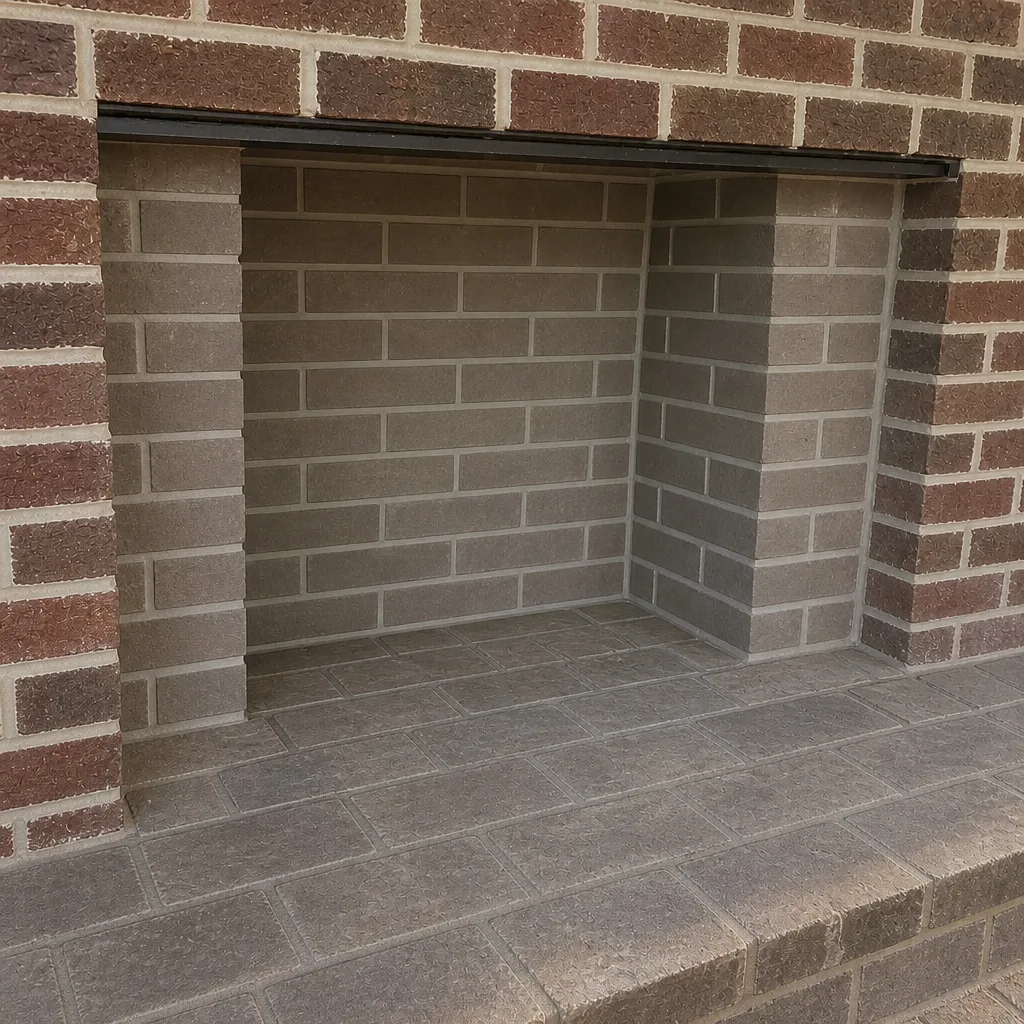
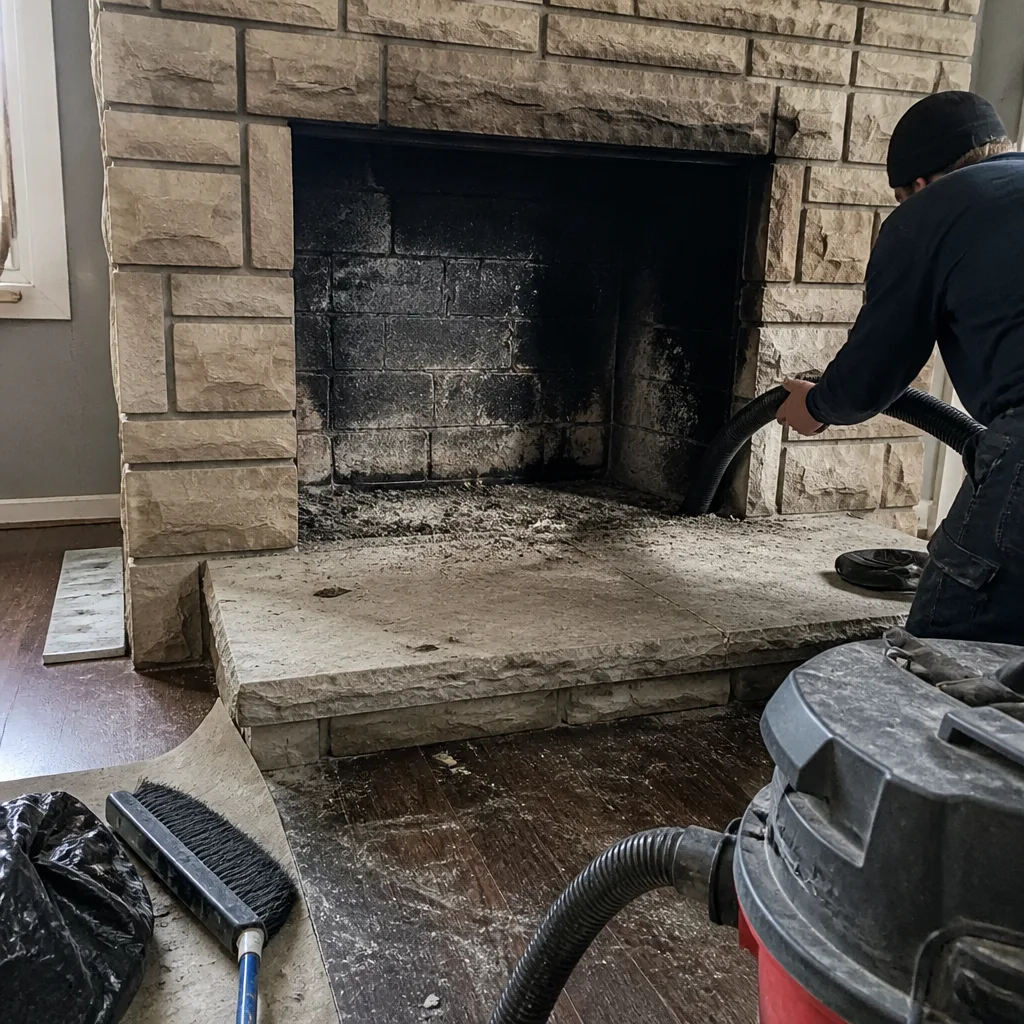
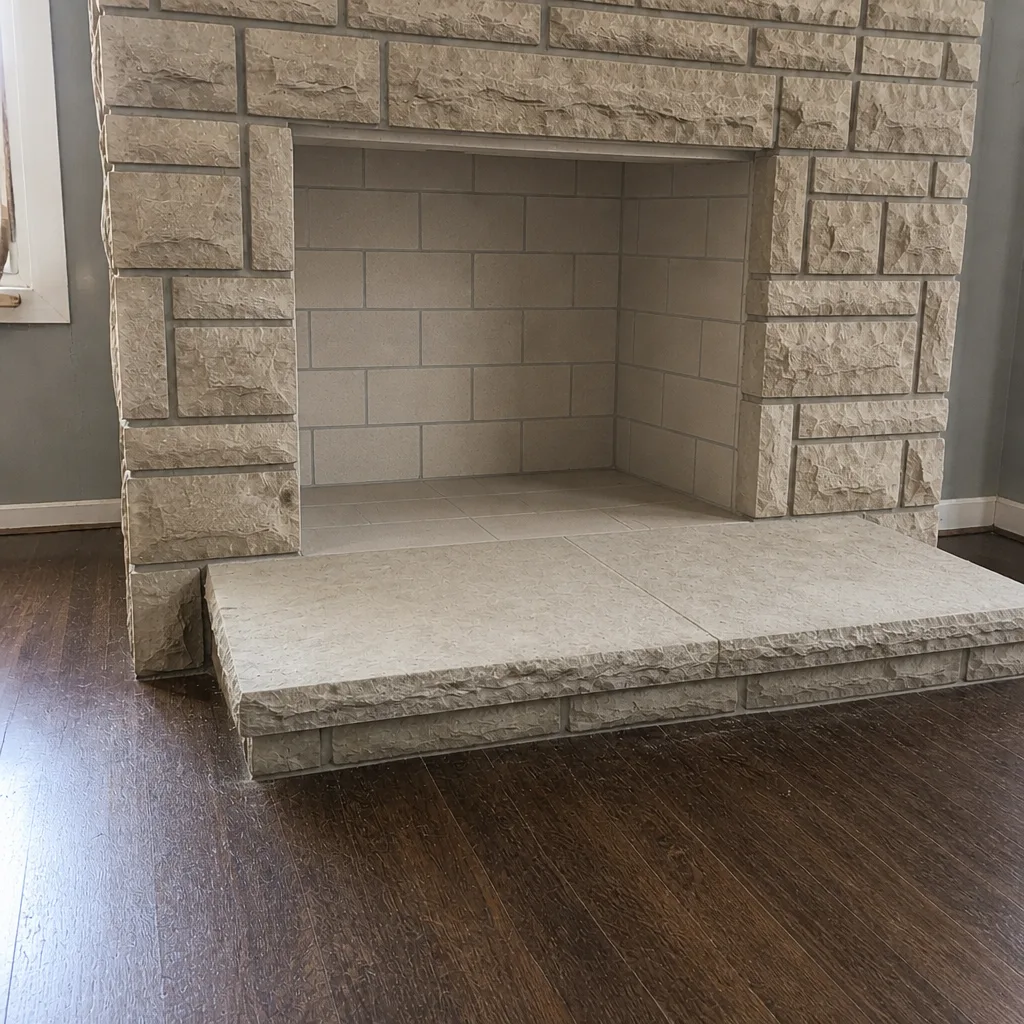
See the difference
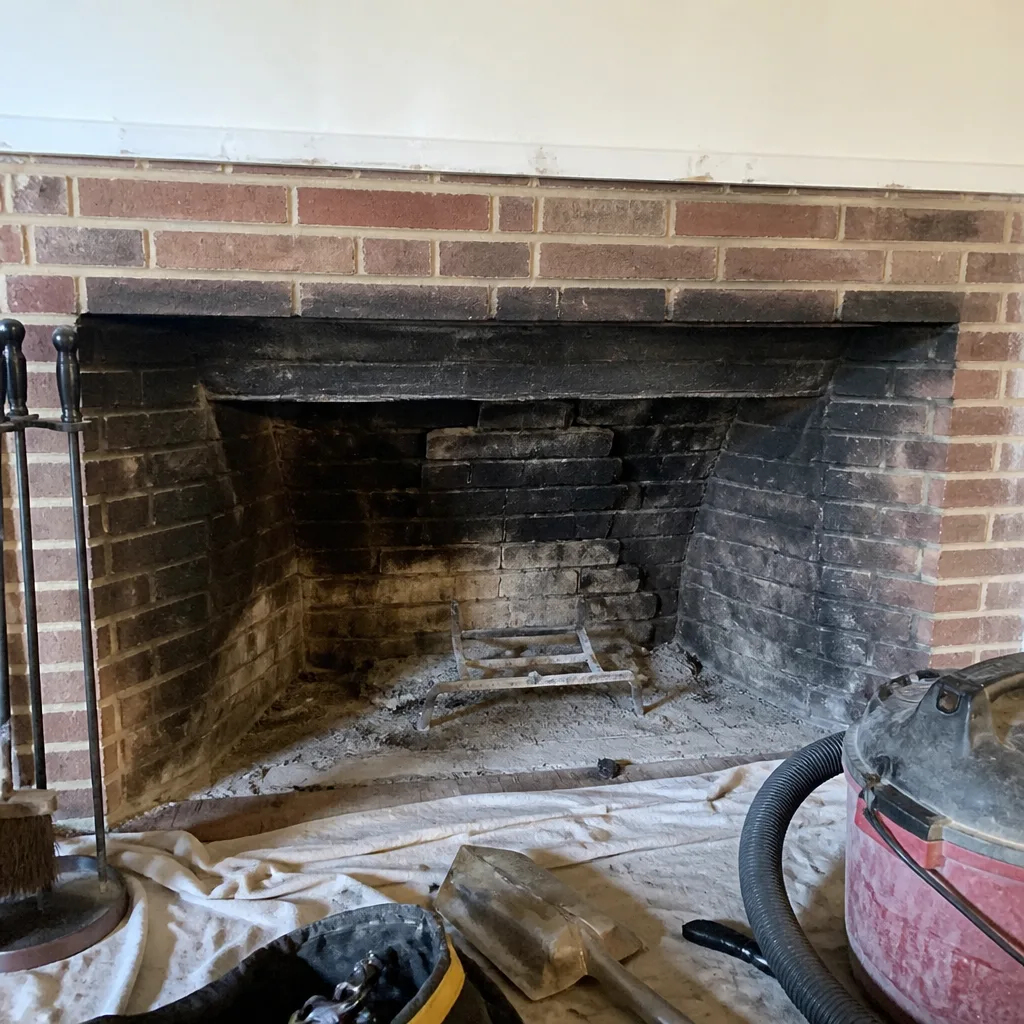 Before
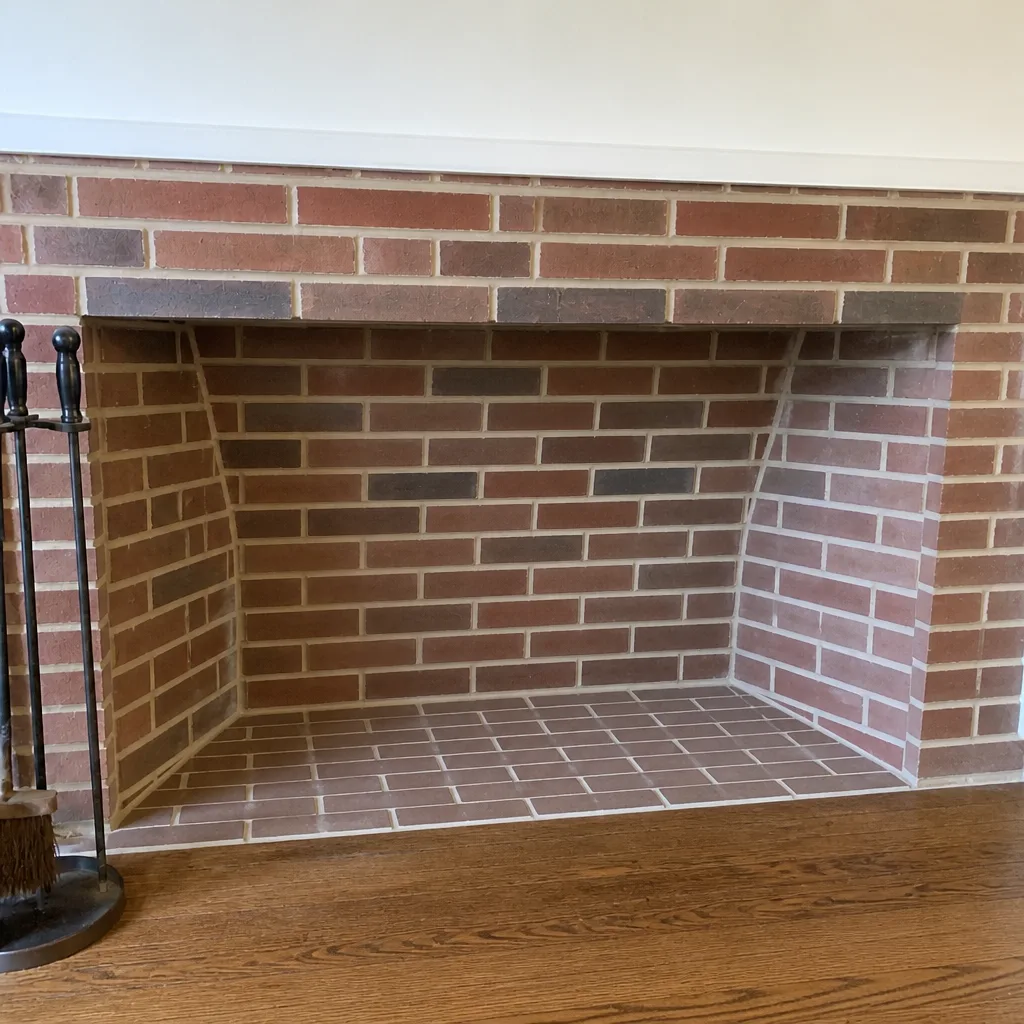 After
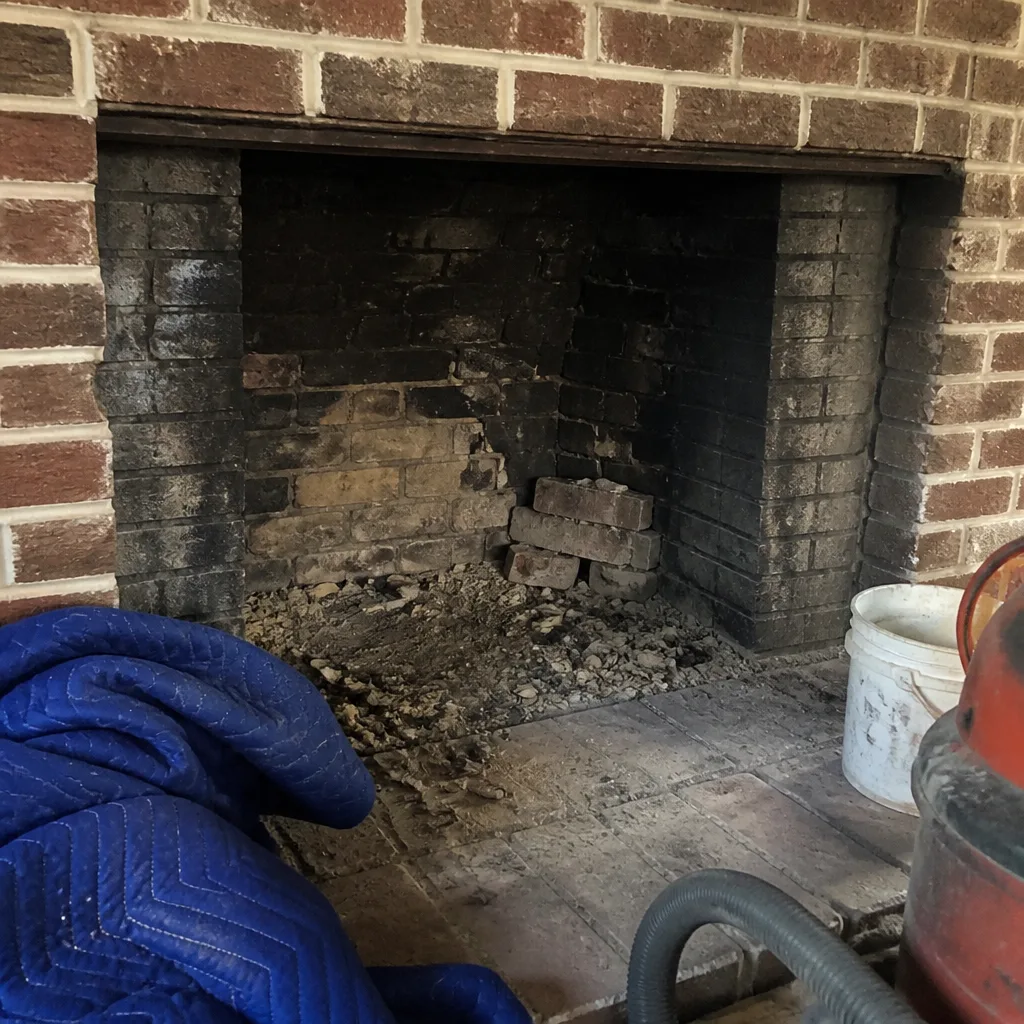 Before
 After
 Before
 After
When to Call a Professional
A chimney emergency is not always a 911 call. Some are a stop sign: the fire happened, the detector chirped, or the smoke rolled back, and the next step is a camera inspection, not another fire. We encourage homeowners to call us when any of the following happen.
- Any of the chimney fire signatures above, even if the sound or flame lasted less than a minute.
- A CO detector alarm, or symptoms that clear when you leave the house.
- A smoke rollback that did not exist the year before.
- A cap or screen that is cracked, dented, or missing.
- A visible crack in the firebox, damper, or masonry, or a piece of flue tile that has fallen into the firebox.
- A full burning season since the last sweep, or a creosote film that has hardened on the flue wall.
Shoreline Chimney Sweep is Shoreline Chimney Sweep – a chimney-only specialist, not a generalist, and we handle inspection, sweep, and repair start to finish. Call (844) 962-2617 for a free estimate. We answer 24/7. Fast dispatch from 7am to 7pm, Sunday through Friday. Estimates are free, and the written estimate sets the final price. Our technicians have up to experience.
Frequently Asked Questions
Call 911, get everyone out of the house, and close the glass doors if you have them. Do not add water to the flue, do not open the damper wide to let it burn, and do not leave a fire burning while you go outside. A chimney fire is a structural emergency and should be managed by the fire department first and a chimney specialist second.
No, not until a Level 2 camera inspection confirms the liner and structure are intact. Even a short-duration fire can crack a clay tile or open a mortar joint, and the chimney will look fine from the outside while admitting carbon monoxide into the home. Schedule the inspection before the next fire, not after.
Annually is the practical standard for a wood-burning fireplace, insert, or stove that sees regular winter use, and more often if you burn heavily or burn unseasoned wood. Cleveland’s long burning season means deposit builds steadily. A sweep before the season starts is the simplest prevention there is. Call (844) 962-2617 for an exact quote – estimates are free.
A smoke alarm may or may not catch a flue fire depending on where it sits, and a standard CO detector is not a fire detector at all. The reliable early warning for a chimney fire is the deposit pattern on the flue wall and the draft behavior of the chimney, which is why annual sweeping and annual visual inspection catch what the alarms cannot.
It often smells like a hot, acrid burning that is different from a normal wood fire, sometimes with a tar-like edge from the creosote itself. After the fact, the house may hold a smoky, creosote smell even when no fire is burning, which is a sign the flue was involved.
Chimney fires are commonly covered as a fire loss under a standard homeowner’s policy, but the settlement depends on the documentation. Photograph the interior and exterior before cleaning anything, leave the deposit pattern in place for the adjuster, and ask for a written inspection report from a CSIA-certified technician. That report is what carries the claim.
Chimney cleaning in Cleveland is priced per job, and the exact figure comes from the written estimate after we see the chimney. A camera inspection and photo report go with the sweep, and the written estimate sets the final price. Call (844) 962-2617 for an exact quote – estimates are free.
Not always, and we say so plainly. A camera inspection determines whether the liner can be restored or must be replaced. When restoration is the right answer, HeatShield liner restoration can often bring a damaged flue back without a full rebuild; when the flue cannot be restored, a DuraFlex flexible liner system relines it completely. Nothing is recommended without camera evidence you can see for yourself.
The Bottom Line
The three chimney emergencies that matter in Cleveland – fire, carbon monoxide, and blockage – are all the end of a chain that starts long before the emergency itself. A sweep that clears creosote breaks the chain before fire. An intact cap and screen break it before blockage. A working CO detector near the appliance and a camera inspection of any compromised flue break it before carbon monoxide moves into living space. After any fire, the chimney goes back into service only after a Level 2 camera inspection. That is what preparedness looks like when it works. For Cleveland, call (844) 962-2617 and we’ll schedule the inspection, sweep, or repair that keeps the chain unbroken.
Written by the team at Shoreline Chimney Sweep.