
Olympia Chimney Chimney Inspection in Cleveland: A Homeowner’s Guide
A report that says “no deficiencies found” on a 1960s Cleveland home with its original clay tile liner is not automatically a clean bill of health. It may simply mean the inspector checked exactly what the standard requires and stopped there. That gap between what an inspection covers and what a homeowner assumes it covers is where expensive surprises live. This guide explains what a proper Olympia Chimney inspection in Cleveland actually involves, what the standards require, and how to read the report you’re handed.
If you’d rather have a specialist walk you through it than sort it out yourself, call (844) 962-2617 and we’ll talk it through.
What Does CSIA Certification Actually Certify?
CSIA certification certifies that an individual has passed a test on chimney and venting standards, codes, and inspection practice. That’s it. It does not certify the company, does not certify the inspector’s repair skills, and does not require any particular equipment. Understanding that distinction changes how you read a report. A certified inspector knows what a Level 1 inspection is supposed to include. Whether they own a camera, carry liner restoration materials, or can actually fix what they find is a separate question entirely.
In our experience, this is the single most misunderstood credential in the trade. Homeowners see “CSIA certified” on a website and assume the whole job is covered, from the first look down the flue to the final repair. In practice, plenty of certified inspectors work for companies that sweep and leave, referring anything structural to somebody else.
What certification does tell you:
– The inspector has demonstrated knowledge of the applicable standards.
– They should know the difference between a Level 1, Level 2, and Level 3 inspection.
– They should be able to document findings in recognizable language.
What it doesn’t tell you:
– Whether they can restore a damaged liner themselves.
– Whether they carry professional-grade restoration materials.
– Whether the company handles repair at all.
That last point matters more in Cleveland than in most markets. Homes here are old, winters are hard on masonry, and the freeze-thaw cycling that happens along the lake plain works on chimney crowns and flue tile year after year. An inspector who can only flag a problem and hand you a referral is only doing half the job.
What Does a Level 1 Inspection Cover, and What Does It Exclude?
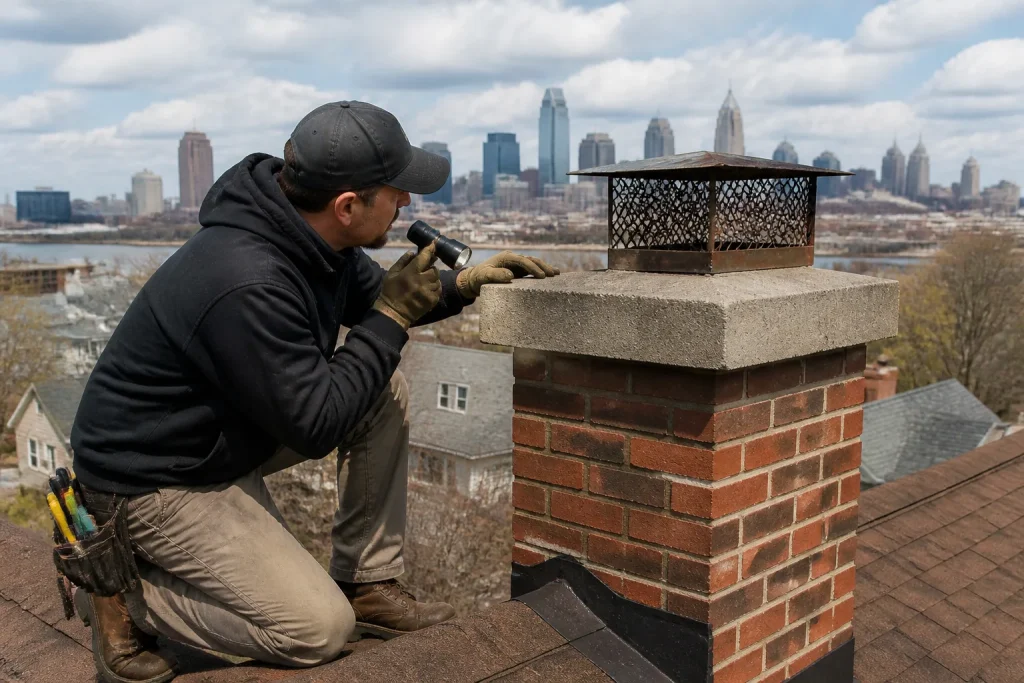
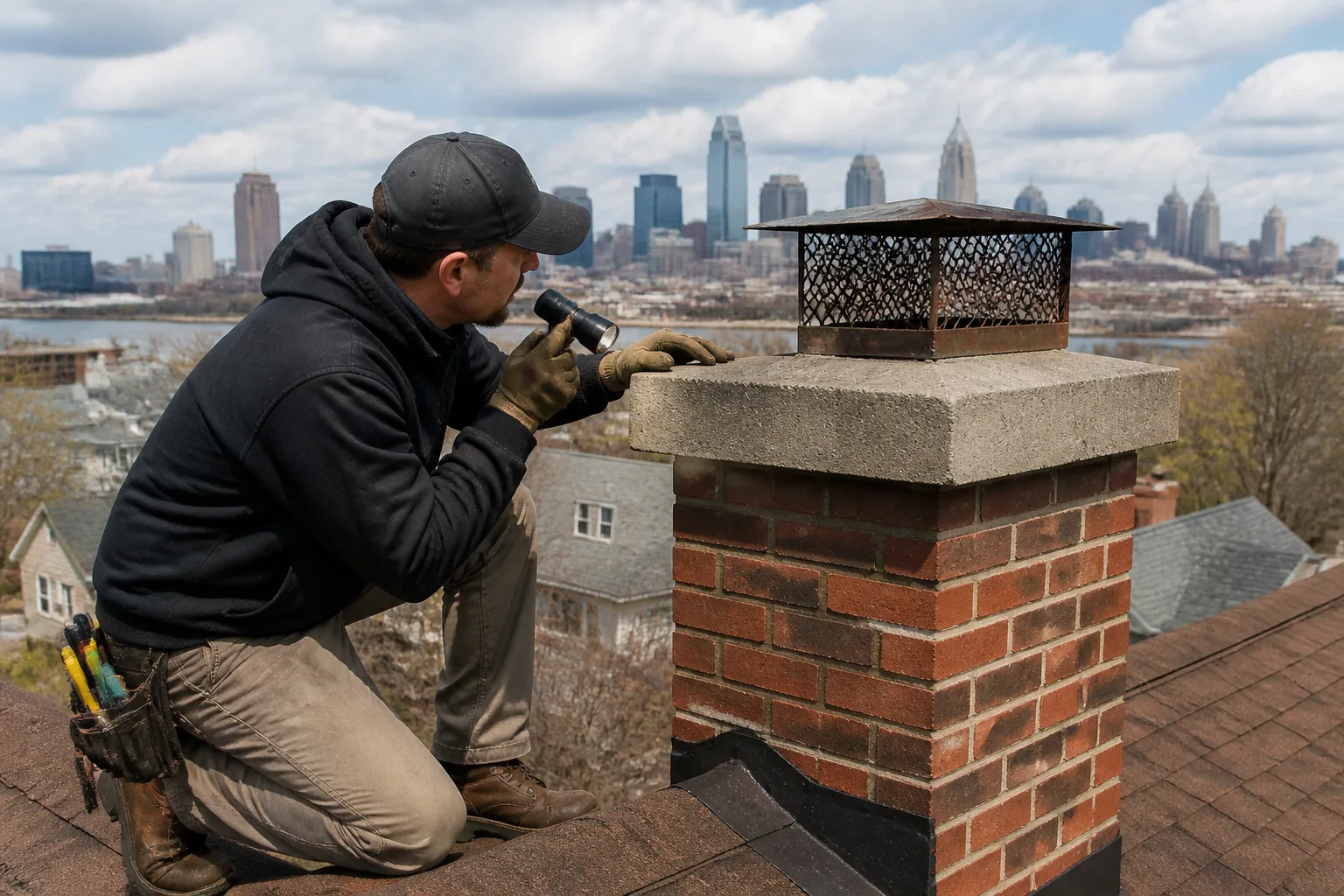
A Level 1 inspection covers the readily accessible portions of the chimney and venting system with the tools normally used during a routine sweep: a flashlight, a mirror, and a brush. It’s appropriate when a chimney has been serviced regularly, hasn’t changed fuel type or appliance, and there’s no known problem. It’s a visual check, not a camera survey.
What a Level 1 explicitly excludes is the interior of the flue beyond what the eye can see from the top and the firebox. It excludes concealed damage behind masonry. It excludes the smoke chamber above the damper in any detail. And it excludes any assessment of whether the liner is appropriate for the appliance currently connected to it. On a Cleveland house from the 1950s or 1960s with original clay tile, that exclusion is significant.
Here’s when to request a Level 2 instead:
- You’ve just bought the house or are about to.
- The chimney has changed fuel type or had a new appliance installed.
- There’s been a chimney fire, a flue collapse, or a building fire nearby.
- You’ve noticed draft problems, smoke spillage, or water stains on the ceiling near the chase.
- The chimney hasn’t been inspected in a year or more.
A Level 2 adds a video camera scan of the flue interior and access to concealed areas through attic, crawl space, or roof. That camera scan is where cracked flue tiles, gaps at the joints, and offset misalignments show up. A tile liner can look perfectly sound from the firebox and be riddled with fractures eight feet up. Without the camera, nobody knows.
If your report doesn’t mention a camera scan and your situation fits any of the five items above, ask for one. That’s the honest answer, and it’s free to ask.
What Should the Inspection Documentation Look Like?
You should receive a written report, and often photographs. The specific language in that report tells you whether you’re looking at a cosmetic note or something that needs action.
Language that indicates follow-up is needed:
– “cracked flue tile,” “spalling,” or “deteriorated mortar joints”
– “gap at tile joint” or “offset liner”
– “no liner” or “unlined flue”
– “creosote glaze” or “third-degree creosote”
– “crown cracks,” “crown separation,” or “washout at the crown”
– “efflorescence” or “water staining” (these suggest moisture is getting in somewhere)
Language that usually indicates cosmetic or minor wear:
– “light soot deposits”
– “surface rust on damper” (unless it’s severe enough to bind)
– “minor hairline cracking in firebox mortar” (needs watching, not necessarily immediate work)
A report that uses vague phrases like “chimney looks good” without specifics is not a useful document. You want named components, stated conditions, and clear recommendations. If the report reads clean but your chimney hasn’t had a camera scan, ask yourself whether the inspector checked what the standard requires or what the situation requires. Those are different things, and a 1960s Cleveland home with original clay tile almost always needs the fuller look.
Flag and Refer Out, or Flag and Fix?
This is the distinction that costs homeowners the most time. Many inspection companies are set up to sweep and inspect only. When they find a compromised liner, they write a referral and move on. You then spend weeks finding a second company, getting a second assessment, and hoping the two agree on what the first inspector saw.
A dedicated chimney specialist can carry the job from inspection through cleaning through repair. At Shoreline Chimney Sweep, that means we’re HeatShield system trained and can often restore a damaged flue liner rather than rebuild it entirely. It means we work with DuraFlex flexible liner systems for complete relining when a flue is too far gone for restoration. And it means the same company that flagged the problem is accountable for solving it.
That matters for two reasons. First, timeline: a referral adds a second scheduling cycle, a second assessment, and often a second set of conclusions. Second, accountability: when one company inspects, cleans, and repairs, there’s no finger-pointing about whose assessment was wrong. Related services in Cleveland start with a proper chimney sweep when the flue just needs cleaning, and move to chimney repair when the report calls for structural work.
We stock and install from a professional-grade roster including Olympia Chimney, HeatShield, Gelco, and Famco. That’s not a marketing line; it’s the practical difference between a company that can act on an inspection finding and one that can only describe it.
What Does Cleveland Building Code Require When You Sell a Home?
Cleveland, like most Ohio municipalities, requires that a chimney be in sound, functioning condition for the property to transfer without complications. Realistically, buyers receive an inspection report and don’t always understand its legal weight. A report that notes deficiencies can become a negotiation point, a lender requirement, or a repair obligation before closing.
That’s why the inspection matters more when you’re selling than when you’re staying. A Level 2 camera scan before listing gives you a clear picture, and a written report you can hand to a buyer’s inspector. It also gives you time to address issues without a closing deadline pressed against you.
Building code details vary, and we don’t give legal advice. What we will say is that a report documenting the condition of the flue, the crown, and the firebox is worth having on hand no matter what the sale timeline looks like. If a buyer’s inspector flags something, a second opinion from a specialist who can also carry out the repair is a better position than a second referral.
When to Call a Pro
Some things you can safely observe yourself: a cracked crown visible from the ground, water stains near the chase, smoke rolling back into the room, or a strong creosote smell. What you cannot safely do is climb onto a roof and inspect a flue interior, or open up a smoke chamber to look at a liner. Those involve height, and in the case of a compromised liner or heavy creosote, real fire risk. A trained professional should handle it.
If you’re in Cleveland and the inspection report you received has language you don’t understand, or you’ve never had one and your home dates from the mid-century era, that’s a good moment for a specialist to look. Shoreline Chimney Sweep handles inspection, sweep, and repair as one job. And if you’re checking credentials before booking, our Cleveland page lays out what we cover.
Key Takeaways
- CSIA certification certifies an individual’s knowledge, not a company’s equipment or repair capability.
- A Level 1 inspection is a visual check. It does not include a camera scan of the flue interior.
- Ask for a Level 2 if you’re buying, the appliance changed, or the chimney hasn’t been serviced in over a year.
- Specific language in a report (cracked tile, spalling, unlined flue) indicates action; vague praise does not.
- Timeline and accountability improve when one company inspects and repairs rather than referring out.
- Cleveland’s freeze-thaw winters are hard on crowns and mortar; annual or biennial inspection pays for itself.
The Bottom Line
Reading an inspection report critically means knowing what the standard covers and what it leaves to the inspector’s judgment. If the report is thin, ask for specifics. If the situation calls for a camera scan, request one. If a deficiency is flagged and the company can’t fix it, ask who can. The best report is the one that tells you what you need to know, in language you can act on.
If you’re in Cleveland and need help, Shoreline Chimney Sweep offers free estimates – call (844) 962-2617. We answer 24/7. Fast dispatch from 7am to 7pm, Sunday through Friday.
Frequently Asked Questions
A Level 1 is a visual check of readily accessible chimney components using standard sweep tools; a Level 2 adds a video camera scan of the flue interior and access to concealed areas. You need a Level 2 when buying a home, after a chimney fire, when the appliance or fuel type changes, or if the chimney hasn’t been inspected in over a year. A camera scan is the only reliable way to see cracked flue tiles and joint gaps above the firebox. Call (844) 962-2617 to discuss which level fits your situation.
No. CSIA certification certifies an individual’s knowledge of standards and inspection practice. It doesn’t cover the company’s equipment, repair capability, or materials stock. To find out whether an inspector can carry a repair through, ask directly whether they perform relining and liner restoration themselves or refer it out. A company that works with HeatShield restoration and DuraFlex liners can often fix what it finds. Call (844) 962-2617 and we’ll tell you what we can handle.
At least once a year if you burn wood regularly, and every two years even with light use. Cleveland’s climate brings repeated freeze-thaw cycles straight through the masonry, which is hard on crowns and mortar joints. Moisture gets in, freezes, expands, and works the masonry loose season after season. An annual look catches those issues while they’re small. If it’s been more than a year since your last service, book one. Call (844) 962-2617 for a free estimate.
Ask two follow-up questions: did the inspection include a camera scan of the flue, and what specific components were examined? A “no deficiencies” report from a visual-only inspection on an older home with original clay tile means nothing was visible from the accessible openings, not that the liner is sound. If no camera scan was done and your chimney is more than a few decades old, request one. Call (844) 962-2617 and we’ll walk you through what a fuller inspection would show.
Why Olympia Chimney Components Matter in This Climate
When a report does call for relining, the product chosen matters in a place with Cleveland’s seasonal swings. Olympia Chimney and DuraFlex systems are built for the demands of a flue that cycles through cold winters and humid summers, which is exactly what a Lake Erie-adjacent climate delivers. Homes along the near-west side of Cleveland and out toward the Heights deal with the same pattern: moisture intrusion in spring, dry heat in summer, then a hard freeze that finds every crack. Professional-grade liner and restoration materials hold up to that rhythm better than commodity alternatives. That’s why we stock from brands including Olympia Chimney and DuraFlex, and why liner restoration using HeatShield is often a better fit than a full rebuild on a flue that’s still structurally sound. The right materials make the repair last; the wrong ones turn a one-time cost into a recurring one.
Written by the team at Shoreline Chimney Sweep.
Need Chimney Cleaning Help?
Call Shoreline Chimney Sweep - licensed & insured, with free written estimates in Cleveland.
(844) 962-2617